


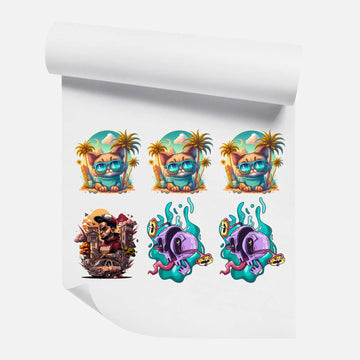







One of the most practical advantages of DTF transfers over printing directly on garments is that you can order ahead and store transfers until you need them. A transfer ordered today can be pressed weeks or months from now — as long as it is stored correctly. Get the storage conditions wrong, however, and transfers that should last over a year can become unpressable in a matter of weeks: the adhesive powder clumps, the film warps, or the colors shift.
This guide covers exactly how to store DTF transfers to maximize their shelf life — the right temperature and humidity conditions, how to package and stack them, what storage environments to avoid, and how to tell whether a transfer that has been sitting in storage is still good to press.
How Long Do DTF Transfers Last in Storage?
A properly stored DTF transfer has a shelf life of 12 to 24 months. Some transfers remain pressable beyond that window, but print quality and adhesion reliability begin to decline as the hot-melt adhesive powder ages.
The shelf life of a transfer depends almost entirely on storage conditions. A transfer kept in a climate-controlled room, away from moisture and direct light, at the higher end of that range. The same transfer stored in a humid garage, exposed to temperature swings, or left in direct sunlight may degrade in weeks.
If you are ordering transfers in advance — whether for planned events, seasonal inventory, or gang sheet batches that cover several weeks of orders — understanding storage is directly tied to whether your transfers perform when you need them. Our FAQ about ordering covers more about transfer production and quality, and what to expect when your order arrives.
The Two Main Enemies of DTF Transfers in Storage
Moisture and Humidity
Moisture is the single biggest threat to stored DTF transfers. The hot-melt adhesive powder on the back of a DTF transfer is hygroscopic — it absorbs moisture from the surrounding air. When humidity is high, the powder absorbs enough moisture to clump, harden unevenly, or lose its ability to reactivate properly under heat.
A transfer damaged by humidity may look fine visually but fail to bond properly when pressed. The adhesive layer activates unevenly, leaving patches where the transfer does not stick or spots that peel after the first wash. In severe cases, moisture also causes the film itself to develop a slight tackiness or wavy texture that prevents it from laying flat on the fabric.
Ideal relative humidity for DTF transfer storage: 40% to 60%. Anything above 70% is a risk. Basements, garages, and unconditioned storage rooms in humid climates are problematic environments without active humidity control.
Heat and Temperature Extremes
The hot-melt adhesive in DTF transfers is designed to activate at pressing temperatures — typically 300 to 320°F. But prolonged exposure to elevated ambient temperatures, even well below pressing temperatures, can cause the adhesive to partially activate or soften, sticking transfers together or to their packaging.
A car trunk in summer, a storage unit without climate control, or a spot near a radiator or heating vent can all reach temperatures that damage transfers over time. Even 90 to 100°F ambient temperature — common in unconditioned summer storage — can cause adhesive migration in transfers stored over weeks.
On the other side, freezing temperatures are not an immediate threat to the adhesive, but repeated freeze-thaw cycles can cause the film to become brittle and crack. Avoid storage environments with significant seasonal temperature swings.
Ideal temperature for DTF transfer storage: 60 to 75°F (15 to 24°C), consistent year-round.
Ideal Storage Conditions
The ideal storage environment for DTF transfers is simply a climate-controlled indoor space — the same conditions that are comfortable for people are comfortable for transfers.
● Temperature: 60–75°F (15–24°C), stable and consistent
● Relative humidity: 40–60%
● Light exposure: Away from direct sunlight and UV light sources, which can fade ink over time
● Air quality: Away from dust, chemical fumes, and aerosols that can contaminate the adhesive surface
A climate-controlled storage room, a spare bedroom, a dedicated shelf in an office, or a temperature-regulated storage cabinet all work well. Most commercial and home environments with central air or heat conditioning fall within the right range for most of the year.
How to Package and Stack DTF Transfers
The way you package transfers for storage is as important as the environment. Even in ideal conditions, improper packaging leads to problems.
Keep Transfers in Their Original Packaging
DTF transfers are typically shipped in sealed poly bags or wrapped in release liner paper. These provide the first layer of protection against moisture and contamination. Do not remove transfers from their original packaging until you are ready to press them. If transfers arrive without protective packaging or you have already removed it, re-wrap them in parchment paper or place them in a sealed zip-lock bag with as much air removed as possible.
Store Transfers Flat
DTF transfers should be stored flat, not rolled or folded. Rolling or folding a transfer can cause the film to develop a permanent curl, which makes it difficult to position correctly on a garment and creates uneven contact with the platen during pressing.
Lay transfers horizontally in a flat drawer, on a shelf, or in a flat storage box. If stacking multiple transfers, place a sheet of parchment paper or release liner between each transfer to prevent them from sticking together. The adhesive side of one transfer resting against the print side of another — especially under any weight — can cause adhesive transfer or ink smearing over time.
Separate by Design to Avoid Confusion
If you are storing multiple different designs, label each stack or package clearly. Once transfers are out of their packaging and stacked, they can look identical on the adhesive side. Mixing up designs leads to pressing errors. Use sticky labels, marker on the packaging, or a simple spreadsheet to track what is stored where. Our gang sheet builder includes design labels you can reference when organizing batched transfer orders.
Avoid Heavy Stacking
Stacking too many transfers on top of each other creates pressure that can press the adhesive powder flat or cause layers to stick together. Limit stacks to 20 to 30 transfers at most, with separator sheets between layers. Heavier items should never be placed on top of stored transfers.
Storage Solutions for Different Shop Sizes
Small Shops and Home Decorators
For decorators pressing a few dozen shirts per week, a simple flat drawer or a bankers box kept in a climate-controlled room is sufficient. Store transfers in sealed zip bags organized by design or order date. Keep the storage spot away from windows, heat sources, and any area with humidity fluctuation (like near a kitchen or bathroom).
Medium Volume Operations
Shops pressing hundreds of shirts per week often pre-order gang sheets in advance to take advantage of batch pricing. A dedicated storage cabinet or flat file cabinet works well at this volume — each drawer holds a category of transfer sizes or design types, clearly labeled, with separator sheets between stacks. A small dehumidifier in the storage area is worthwhile if your location has seasonal humidity above 60%.
High Volume and Wholesale
At wholesale volume — storing thousands of transfers for resale or for large production runs — a dedicated climate-controlled storage room with consistent temperature and humidity monitoring is the right solution. Transfers stored at this scale benefit from shelving systems that keep them flat and organized by SKU or design ID. Our ready-to-print gang sheet option is popular with wholesale buyers who order in advance and store until needed.
How to Tell If a Stored Transfer Is Still Good
Before pressing a transfer that has been in storage for an extended period, run a quick inspection:
● Visual check: Hold the transfer up to light. The ink layer should look crisp and the film should be flat. Yellowing, fading, or visible moisture spots are red flags.
● Adhesive check: Look at the adhesive side. The powder should appear evenly distributed and matte. If the powder looks clumped, shiny, or has bare patches, the adhesive has been compromised by moisture or heat.
● Film flexibility: Gently flex the transfer. It should be flexible without cracking or crinkling. A brittle film that cracks when flexed has been damaged, usually by temperature extremes.
● Test press: When in doubt, do a test press on a scrap piece of fabric before pressing on a customer's garment. A properly stored transfer bonds cleanly and evenly within standard press settings.
If a transfer fails the test press — poor adhesion, uneven bonding, or the adhesive not activating — it has likely been compromised in storage and should not be used for production. Contact our team through the contact page if you have concerns about transfer quality on arrival.
What to Do with Transfers After Long Storage
Transfers that have been stored for 6 months or longer may benefit from slightly extended press time — 1 to 2 seconds beyond your normal setting — to give the adhesive a little extra time to reactivate fully. This is a minor adjustment, not a significant change. If a transfer requires dramatically longer or hotter pressing than normal to bond, the adhesive has degraded and the transfer should be retired.
For wash care after pressing, follow the same guidelines regardless of how long the transfer was stored — cold water, turned inside out, low heat drying. See our DTF wash and care guide for full wash care instructions.
Frequently Asked Questions
How long do DTF transfers last in storage?
In proper storage conditions — 60 to 75°F, 40 to 60% relative humidity, away from direct light and moisture — DTF transfers last 12 to 24 months. Poor storage conditions significantly shorten this window.
Can I store DTF transfers in a garage or storage unit?
Only if the space is climate-controlled. Unconditioned garages and storage units experience wide temperature and humidity swings that degrade DTF transfers quickly — particularly in summer heat and humid climates. If you must use a non-conditioned space, use airtight containers with silica gel desiccant packets to absorb moisture, and check transfers regularly.
What happens if a DTF transfer gets wet?
Brief surface moisture — like a drop of water — can usually be allowed to dry completely before pressing with no lasting damage. Prolonged moisture exposure or storing in a high-humidity environment causes the adhesive powder to clump and lose adhesion. If a transfer has been wet and dried unevenly, test press it on scrap fabric before using it on a customer order.
Should I refrigerate DTF transfers to extend their shelf life?
Refrigeration is not necessary and not recommended for standard storage periods. The temperature and humidity fluctuations that occur when removing a refrigerated transfer to a warm room can cause condensation to form on the adhesive surface. Room temperature storage in a climate-controlled environment is sufficient for the standard 12 to 24 month shelf life.
Store Smart, Press Confidently
DTF transfers are a durable product when stored correctly. The conditions they need — stable room temperature, moderate humidity, flat storage away from light and moisture — are easy to achieve in any standard climate-controlled workspace. Get the storage right and transfers ordered today will press just as cleanly six months from now as the day they arrived.
If you are building an inventory of transfers for upcoming orders or seasonal demand, use the DTF gang sheet builder to order efficiently in advance. And if you want to test a new design before adding it to your stored inventory, our DTF transfer sample pack is the lowest-risk way to confirm quality before committing to a larger batch.


