


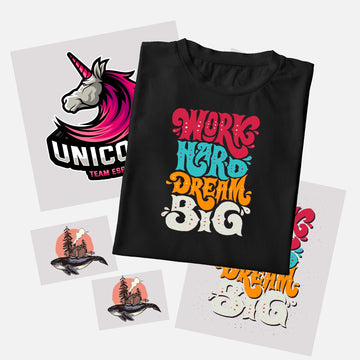


Running a custom apparel shop on Etsy used to mean either owning expensive printing equipment or relying on print-on-demand platforms with thin margins and limited design control. DTF transfers offer a third option that most Etsy sellers have not fully explored. You order ready-to-press DTF transfers with no minimums, press them onto blanks you source yourself, and ship finished garments directly to your customers — with full control over quality, garment selection, and turnaround time.
This guide is written specifically for Etsy sellers and small custom apparel shops. It covers how to set up a DTF-based workflow without owning a printer, how to order transfers efficiently, how to price your Etsy listings for profit, how to handle made-to-order vs. ready-to-ship inventory, and how to scale without buying equipment you do not need.
Why DTF Works So Well for Etsy Sellers
Most Etsy sellers in the custom apparel space fall into one of two camps: they use a print-on-demand (POD) platform like Printful or Printify, or they own their own printing equipment. Both have real drawbacks.
POD platforms handle production and shipping but take a large cut of every sale. Margins are thin — often 20% to 30% on a shirt — and you have no control over print quality, garment selection, or turnaround. You also cannot offer truly custom work where each order is unique.
Owning equipment means a large upfront investment, ongoing maintenance, and a learning curve before you produce consistent quality. For a part-time Etsy shop, that investment rarely makes sense until you are already running significant volume.
DTF transfers sit in the middle. You source your own blanks, order transfers as needed with no minimum, press them with a heat press you likely already own or can buy for a few hundred dollars, and ship finished products with full quality control. Margins are significantly better than POD, and you do not need a printer. Check our FAQ about ordering to understand exactly what you need to get started.
What You Need to Run a DTF Etsy Shop
The equipment and supply list for a DTF-based Etsy workflow is short:
● A heat press: A quality clamshell or swing-away press in the 15×15 inch range covers most shirt and hoodie orders. Entry-level presses start around $200 to $300. A reliable press is the one piece of equipment worth investing in — inconsistent pressure and temperature are the main causes of DTF transfer failures.
● Blank garments: Source from wholesale distributors like S&S Activewear, Alphabroder, or SanMar. Buying blanks wholesale rather than retail dramatically improves your margin on each finished shirt.
● DTF transfers: Ordered as needed from dtfprint.me with no minimum. You can order a single transfer to fulfill a single order, or batch multiple orders together onto gang sheets to lower your per-transfer cost.
● Parchment paper or silicone cover sheets: Used during pressing to protect the transfer and the platen surface.
● Shipping supplies: Poly mailers, tissue paper, and packing materials appropriate for your brand presentation.
That is the full list. No printer, no ink, no RIP software, no film or powder. The production complexity lives on our end — you receive ready-to-press transfers and handle the pressing and fulfillment.
How to Order DTF Transfers for Your Etsy Shop
Made-to-Order Model
Most Etsy sellers start with a made-to-order model — a customer places an order on Etsy, you order the transfer, press it when it arrives, and ship. This approach requires zero upfront inventory but adds production lead time.
With same-day production available on transfers ordered before the daily cutoff, your transfer can arrive the next day in most cases. Add your press time and shipping prep, and a 2 to 4 business day turnaround from order to ship is realistic — competitive with most Etsy buyers' expectations for custom work.
Gang Sheet Batching for Efficiency
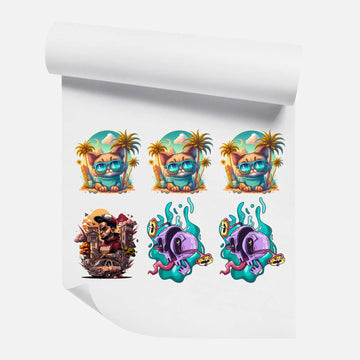
The made-to-order model works, but it is not the most cost-efficient approach if you are getting steady volume. A better workflow is to batch incoming orders — hold 3 to 7 days of orders, arrange all the transfers onto gang sheets, and order once. You press the full batch when the sheet arrives and ship everything together.
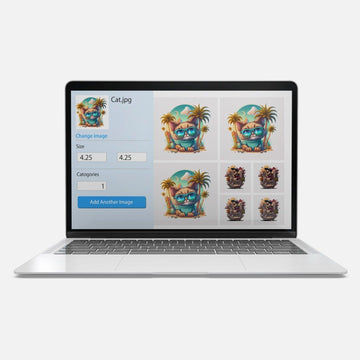
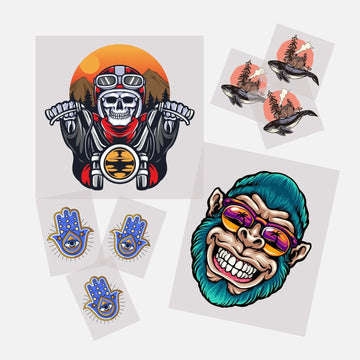
Our DTF gang sheet online builder lets you upload multiple designs, size them correctly, and arrange them on a single sheet. A 22×60 inch sheet can hold 12 to 20 medium chest prints depending on design sizes. Ordering in batches lowers your cost per transfer significantly compared to ordering each design individually, which directly improves your Etsy margin.
Ready-to-Ship Inventory
Once you identify your bestselling designs — the ones that sell repeatedly week after week — it makes sense to pre-press a small inventory of ready-to-ship items. Order a batch of transfers for your top 5 to 10 designs, press them onto blanks, photograph them, and list them as ready-to-ship on Etsy.
Ready-to-ship listings convert significantly better on Etsy than made-to-order listings because buyers see a shorter delivery estimate. For your top sellers, the small inventory risk is worth the conversion improvement.
Our ready-to-print DTF gang sheet option is ideal for pre-pressing inventory runs — you upload a pre-arranged file and receive a production-ready sheet.
Pricing Your Etsy DTF Listings
Etsy pricing for custom apparel needs to account for your full cost stack — not just the transfer price. Here is a realistic cost breakdown for a standard custom t-shirt:
● Blank t-shirt (wholesale Bella+Canvas 3001): $7 to $10
● DTF transfer (10×10 inch via gang sheet): $2 to $3.50
● Press labor (3 minutes at your effective hourly rate): $1 to $2
● Overhead (parchment paper, heat press wear, electricity): $0.50
● Etsy fees (listing + transaction + payment processing): ~15% of sale price
Total cost before Etsy fees: approximately $11 to $16 per shirt. To maintain a 40% to 50% margin after all costs including Etsy fees, a retail price of $25 to $35 is appropriate for a standard custom t-shirt. Premium garments, specialty transfers (glitter, glow), or multi-location prints justify higher prices.
Do not price to compete with mass-produced POD shops at $18 to $20 a shirt. DTF-pressed apparel on quality blanks is a genuinely different product — position it that way and price it accordingly.
Artwork and File Setup for Etsy Custom Orders
Custom Etsy orders typically mean collecting artwork from customers — logos, custom text, personal photos, or design requests. Setting clear artwork requirements upfront saves enormous back-and-forth.
● Tell customers in your listing or order notes that you need a PNG file with transparent background at 300 DPI
● Specify the maximum and minimum design dimensions you can work with
● Let customers know that low-resolution files (screenshots, small JPEGs) cannot be printed at quality — ask for the original source file or a vector version
● For text-based orders, collect the exact text, font preference or style description, and any color requirements before ordering the transfer
For customers who do not have print-ready files, you can offer a design service as an add-on — charge $10 to $25 for artwork cleanup or design creation and build that into your listing or as a separate listing. Our artwork and sizing FAQ outlines file requirements clearly and can be shared with customers who ask what format to send.
Managing Turnaround Time on Etsy
Etsy buyers pay close attention to estimated delivery dates, and Etsy's algorithm rewards shops with consistent, on-time shipping. Setting your processing time correctly is important.
● Made-to-order processing time: 3 to 5 business days is a realistic and competitive processing window for DTF custom orders. This accounts for transfer ordering, production, pressing, and packing.
● Ready-to-ship items: Set 1 to 2 business day processing to take advantage of the faster delivery estimate in search results.
● Rush orders: If you offer expedited options, charge a rush fee and be realistic about what you can commit to. Same-day production on our end means you can offer faster turnaround when needed — see our
Communicate proactively. If an order will take longer than expected, message the customer before they message you. Etsy reviews are heavily influenced by communication quality, not just product quality.
Building a Product Line Around DTF Transfers
One of the advantages of DTF for Etsy sellers is the ability to offer a wide product range without separate equipment for each item type. The same heat press and the same transfer source handles all of these:
● T-shirts and tank tops
● Hoodies and crewneck sweatshirts
● Tote bags and canvas accessories
● Baseball caps (with a hat press attachment or dedicated hat press)
● Baby onesies and youth apparel
● Aprons, tea towels, and kitchen textiles
Expanding across product categories increases your shop's average order value and attracts a wider customer base. A buyer who comes for a custom shirt may return for a matching tote or hoodie if you carry them. Use the DTF gang sheet builder to mix transfers for different product types on the same sheet when batching orders.
Scaling Your DTF Etsy Shop
Growth in a DTF Etsy shop comes from three levers: more orders, lower cost per order, and higher average order value.
● More orders: Etsy SEO, regular new listings, and strong photography all drive visibility. Use relevant search terms in your listing titles and tags. Photograph your finished garments on models or flat lay — lifestyle photography significantly outperforms design-only mockups.
● Lower cost per order: As volume grows, batch your transfer orders on larger gang sheets and order more frequently to reduce per-transfer cost. Our
● Higher average order value: Offer bundles (matching shirts for couples, family sets), upsell to premium garment options, and add specialty transfer options like glitter or glow in the dark at a premium price point.
Frequently Asked Questions
Do I need a printer to sell custom shirts on Etsy with DTF?
No. DTF transfers are ordered ready to press — you receive the finished transfer and apply it to a blank garment using a heat press. No printer, no ink, no film, and no technical setup required on your end.
How fast can I fulfill a custom Etsy order using DTF?
With same-day production on transfer orders placed before the daily cutoff, you can receive a transfer the next business day in most cases. Add your pressing time and you can realistically ship within 2 to 3 business days of the order being placed. Setting a 3 to 5 business day processing time on Etsy gives you a buffer and consistent on-time delivery.
Is DTF better than print-on-demand for Etsy?
For margin and quality control, yes. DTF gives you 40% to 60% gross margin on finished garments compared to 20% to 30% on most POD platforms. You also choose your own blanks, control the print quality directly, and can offer custom work that POD platforms cannot accommodate. The trade-off is that you handle production and shipping yourself rather than having it automated.
What is the minimum order for DTF transfers?
There is no minimum. You can order a single transfer to fulfill a single Etsy order. As your volume grows, ordering via gang sheets lowers your cost per transfer significantly. Visit our transfers by size and quantity page to see current pricing by size.
Your Etsy Shop, Powered by DTF
DTF transfers give Etsy sellers something that has been hard to find: a way to produce genuinely high-quality custom apparel at competitive margins without owning a print shop. No minimums, no setup fees, full color on any garment, and same-day production when you need to move fast.
Start with a DTF transfer sample pack to press your first few designs and see the quality in person. When you are ready to build your first batched order, use the gang sheet builder to arrange your transfers efficiently. And if you have questions about getting started, reach our team through the contact page — we work with Etsy sellers and small shops regularly and can point you in the right direction.


