




If you have ever looked at a DTF transfer and a traditional iron-on transfer sitting side by side, they look similar enough that it is easy to assume they are basically the same thing applied differently. They are not. DTF transfers and classic iron-on transfers use completely different materials, work through different processes, and produce results that are far apart in quality, durability, and versatility.
The confusion is understandable. Both involve pressing a design onto a fabric using heat. But the technology behind each method determines how long the print lasts, how it feels on the shirt, what fabrics it works on, and how it holds up after dozens of washes. This guide breaks down the real differences between DTF transfers and iron-on transfers so you know exactly what you are getting — and when each makes sense.
What Is a Traditional Iron-On Transfer?
Traditional iron-on transfers — also called heat transfer paper prints or inkjet iron-ons — are designs printed onto a coated paper using a standard inkjet or laser printer. The paper has a heat-activated adhesive backing. When you press the paper onto fabric with an iron or heat press, the adhesive melts and bonds the printed design to the fabric fibers. Then you peel the backing paper away, leaving the design on the shirt.
The ink in a traditional iron-on transfer sits on top of a plastic or polymer carrier layer. That carrier layer bonds to the fabric — the ink is embedded in the carrier, not directly fused to the fibers. This is an important distinction, because that carrier layer is what you feel when you touch the print: a slightly plastic, sometimes stiff surface texture that sits visibly on top of the garment.
Traditional iron-on transfers have been a consumer and small-batch DIY staple for decades because the barrier to entry is low. A home printer, iron-on transfer paper from a craft store, and a household iron are all you need. The quality ceiling, however, is also low.
What Is a DTF Transfer?
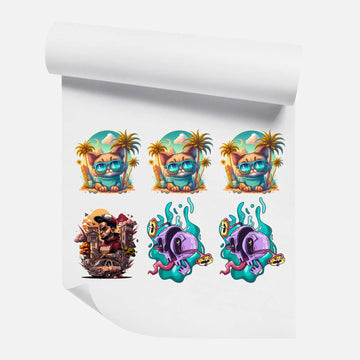
DTF stands for Direct-to-Film. In the DTF process, a design is printed directly onto a special PET film using professional DTF inks — CMYK plus white — through a dedicated DTF printer. A hot-melt adhesive powder is then applied to the wet ink and cured in a heat tunnel, creating a finished transfer ready to press onto fabric.
When you press a DTF transfer onto a garment using a heat press at the correct temperature and time settings, the hot-melt adhesive reactivates and bonds the ink directly to the fabric fibers. The PET film is peeled away — either hot or cold depending on the transfer type — leaving only the ink on the shirt. There is no carrier layer left behind. The ink bonds to the fabric itself.
This is what makes DTF transfers fundamentally different from traditional iron-on transfers: the ink bonds directly to the fibers rather than sitting on top of a separate plastic carrier. Our DTF transfer products are produced using professional DTF equipment with precise ink and powder formulations designed for maximum durability.
Key Differences: DTF vs Iron-On
Print Quality and Detail
DTF transfers produce significantly sharper, more detailed prints than traditional iron-on transfers. DTF printers operate at resolutions that render fine lines, tiny text, gradient color blending, and photographic images with clean edges and rich, saturated color. The ink layers are thin and precisely deposited.
Traditional iron-on transfers are limited by the resolution of whatever consumer printer produced them, and the image quality degrades further when the design is pressed because the heat can cause slight ink spread or carrier distortion. Fine details like thin outlines, very small text, and subtle gradients rarely survive the iron-on process cleanly.
If you are printing a logo with thin lines, a full-color photographic design, or anything with text under half an inch tall, DTF produces a cleaner, more professional result every time.
Feel and Texture on the Fabric
The on-fabric feel is one of the most immediately noticeable differences between DTF and iron-on transfers. DTF transfers have a soft hand feel. Because the ink bonds directly to the fabric fibers with a thin adhesive layer and no separate carrier, the print area is flexible and feels much closer to the fabric itself. High-quality DTF prints have a feel often described as smooth and slightly soft — far closer to a screen print than to a sticker applied to the shirt.
Traditional iron-on transfers have a distinctly plastic feel. The carrier layer sits on top of the fabric surface and is noticeable both visually and to the touch. It can feel stiff, rubbery, or crinkly, especially on thinner fabrics. This is the classic "heat transfer feel" that signals a lower-cost print method when you pick up the shirt.
Durability and Wash Performance
DTF transfers last significantly longer than traditional iron-on transfers through repeated washing. A properly applied DTF transfer, pressed at correct settings and washed according to care instructions — cold water, inside out, low heat — maintains its quality for 50 or more wash cycles without significant fading, cracking, or peeling. Many DTF prints outlast the garment itself.
Traditional iron-on transfers begin showing wear much sooner. The plastic carrier layer cracks and peels as it is flexed repeatedly through wear and washing. Heat in the dryer accelerates this breakdown. It is common to see iron-on transfers showing visible peeling, cracking, or fading after 10 to 20 washes, depending on the quality of the transfer paper and how the garment is cared for. Our DTF wash and care guide covers exactly how to get maximum longevity out of DTF transfers.
Fabric Compatibility
DTF transfers work on virtually any fabric type — cotton, polyester, cotton-poly blends, nylon, canvas, denim, fleece, and performance fabrics. Because the adhesive bonds to the fibers rather than relying on the fabric to chemically interact with an ink layer, DTF transfers are not material-sensitive the way some other print methods are.
Traditional iron-on transfers also work on most fabric types, but performance varies considerably. Synthetic fabrics like polyester can cause problems because the carrier does not bond as firmly to low-surface-energy synthetic fibers. High-polyester fabrics may result in adhesion failures, lifting edges, or transfers that peel after the first wash. Cotton works better than synthetics for iron-on transfers, but even on cotton the durability difference versus DTF remains significant.
For specialty items — hats, bags, shoes, performance wear — DTF transfers have a clear advantage in adhesion and durability across a wider range of materials. See our guide to DTF printing on hats and our guide to DTF printing on hoodies for application-specific tips.
White and Color on Dark Fabrics
One of the biggest practical advantages of DTF over traditional iron-on transfers is performance on dark-colored fabrics. DTF transfers include an opaque white underbase ink layer that is printed first, allowing full-color designs to sit on top of black, navy, dark red, and other dark fabrics with accurate, vibrant color reproduction. The white layer blocks the dark fabric from showing through the color.
Traditional iron-on transfers on dark fabrics are a known limitation. Most consumer inkjet iron-on papers are transparent — they work fine on white or light-colored shirts because the fabric provides the white base. On dark fabrics, the colors appear dull or invisible because there is no white underbase to make them pop. Dark-fabric iron-on transfer papers do exist, but they produce noticeably lower quality results with a thick, white-bordered carrier that is visible around the design edges.
Application Equipment
Traditional iron-on transfers are designed for home irons, which makes them accessible but inconsistent. A household iron applies uneven pressure and the temperature varies across the surface. The result is transfers that may bond well in one area and lift in another, or transfers applied at the wrong temperature because home irons are difficult to calibrate precisely.
DTF transfers require a heat press — either a clamshell or swing-away press capable of applying consistent, even pressure across the full transfer at a precise temperature, typically 300 to 320°F for 10 to 15 seconds. A heat press produces repeatable results every time. If you are pressing DTF transfers without a heat press, the application quality will be inconsistent.
For decorators already using a heat press for DTF, the equipment you already have is exactly what DTF transfers need. For someone with only a household iron, traditional iron-on transfers are accessible, but the quality trade-offs are significant.
Minimum Order and Scalability
Traditional iron-on transfers scale only as fast as you can print and press them individually at home. They are a one-at-a-time method — there is no realistic way to produce 50 iron-on transfers efficiently in a home or small shop setting.
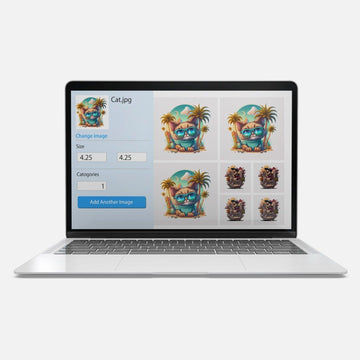
DTF transfers are built for scale. Professional DTF printers produce transfers at high volume efficiently, and ordering DTF transfers through a supplier means you can get 10 or 1,000 transfers with the same per-unit quality. Our gang sheet builder lets you arrange multiple designs on a single large film sheet to minimize cost per transfer, whether you are ordering for yourself or restocking an inventory of designs.
When Does a Traditional Iron-On Transfer Make Sense?
Traditional iron-on transfers are a reasonable choice in very specific circumstances: a one-off shirt you are making for yourself, a low-stakes personal project where durability is not important, or a situation where you need to print from your home computer immediately with no lead time and no budget for anything else.
For any professional use — selling custom shirts, producing team uniforms, creating branded merchandise, fulfilling customer orders — traditional iron-on transfers fall short on durability, professionalism, and scalability. The quality difference becomes visible immediately to customers.
When DTF Transfers Are the Right Call
DTF transfers are the right choice for virtually any decorating situation beyond casual personal DIY use. They produce professional-grade print quality with soft hand feel, last far longer through washing, work on any fabric including dark colors, and scale from single transfers up to large production runs without a quality drop.
For custom apparel businesses, Etsy sellers, event coordinators, sports teams, and branded merchandise — DTF transfers deliver results that iron-on transfers simply cannot match. If you want to see the quality difference before committing to a larger order, our DTF transfer sample pack is the lowest-stakes way to test the process with your heat press and fabrics. And if you are ready to start building a transfer inventory, the gang sheet builder is the most cost-effective way to order multiple designs in one batch.
Frequently Asked Questions
Are DTF transfers the same as iron-on transfers?
No. DTF transfers use a direct-to-film printing process with professional DTF inks and hot-melt adhesive powder. The ink bonds directly to fabric fibers when pressed. Traditional iron-on transfers use consumer inkjet or laser-printed designs on coated paper with a separate plastic carrier layer that sits on top of the fabric. The quality, durability, and feel are significantly different.
Do DTF transfers feel like iron-on transfers?
No. DTF transfers have a soft, flexible feel because the ink bonds directly to the fabric fibers with a thin adhesive layer. Traditional iron-on transfers have a plastic or rubbery feel from the carrier layer that remains on the fabric after pressing. The texture difference is noticeable immediately when you touch both types of prints.
Can you apply DTF transfers with a regular iron?
DTF transfers are designed for a heat press that applies consistent, even pressure at a precise temperature (300–320°F for 10–15 seconds). A household iron can technically apply a DTF transfer, but the results are inconsistent because home irons do not apply even pressure or maintain precise temperatures across the full transfer area. For consistent, professional results, a dedicated heat press is the right tool.
Are DTF transfers better than iron-on transfers for dark shirts?
Yes. DTF transfers include a white underbase ink layer that makes full-color designs vibrant and accurate on dark fabrics. Traditional iron-on transfers on dark fabrics either appear dull and faded (transparent paper) or produce thick, visible white borders around the design (dark fabric paper). DTF transfers on dark shirts look the same as on white shirts because the white underbase handles the color blocking.
How many washes do DTF transfers last?
A properly applied DTF transfer, washed in cold water inside out and dried on low heat, typically lasts 50 or more wash cycles without significant fading or cracking. Traditional iron-on transfers often begin cracking or peeling within 10 to 20 washes. Proper wash care extends DTF transfer life considerably — see our DTF wash and care guide for full instructions.


