




Custom baby onesies and infant apparel are one of the fastest-growing categories in the custom printing market — popular with Etsy sellers, baby shower gift makers, family portrait coordinators, and small clothing brands launching a kids line. If you already press DTF transfers on adult and youth t-shirts, adding baby and infant apparel to your product range requires only a few adjustments to your existing process.
Baby clothes present specific considerations that adult apparel does not: smaller platen footprints, more delicate fabrics, tighter design sizing, and — for anyone selling custom baby apparel — awareness of what materials contact infant skin. This guide covers all of it, from heat press settings and design sizing to the practical details of working with infant onesies and kids clothing at production volume.
Do DTF Transfers Work on Baby Onesies?
Yes. DTF transfers bond effectively to the cotton and cotton-blend fabrics used in most infant apparel, including the ribbed cotton knit of standard onesies, the interlock knit of baby t-shirts, and the fleece of infant sweatshirts. The hot-melt adhesive in DTF transfers bonds to cotton fibers the same way it does on adult apparel — the infant size of the garment does not change the chemistry of the bond.
What does change is the technique. Infant onesies are small, often have snap closures at the bottom that interfere with the pressing surface, and are made from fabrics that may be thinner or more delicate than standard adult tees. Getting a clean, even press on a onesie requires a bit more setup than pressing a standard 18x18 platen on an adult t-shirt.
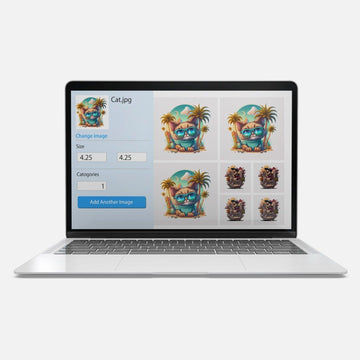
For Etsy sellers and small clothing brands building a custom baby apparel line, our gang sheet builder makes it easy to tile multiple small onesie designs — sized for infant chests — across a single film sheet to reduce cost per transfer.
Heat Press Settings for Baby and Infant Apparel
Standard infant onesie fabric — 100% cotton or cotton-poly blend in a ribbed or interlock knit — presses well at slightly adjusted settings from adult apparel defaults. The knit fabric is thinner than most adult tees and requires a bit less time to reach bonding temperature throughout the thickness.
● Temperature: 295 to 310°F (146 to 154°C)
● Time: 10 to 12 seconds
● Pressure: Medium — firm enough to make full contact across the transfer but not so heavy that the thin knit fabric is crushed flat
These are starting points. Always do a test press on a sample onesie before pressing your production run. If the transfer is not bonding fully at 10 seconds, add 2 seconds before adjusting temperature. After peeling, cover the design with a Teflon sheet or parchment paper and press for 3 to 5 seconds to set the adhesive fully — this finishing press is especially important on thinner fabrics where the first press may not have driven the adhesive fully into the fibers.
For full heat press settings guidance across different fabric types and weights, see our DTF heat press settings guide.
Handling the Onesie Snap Closures
The biggest physical challenge with pressing baby onesies is the snap closure at the crotch. When a flat onesie is laid on a heat press platen, the snaps sit on top of the platen surface and create an uneven pressing base — one side with snaps sits slightly higher than the other, which means the platen cannot make flat, even contact across the full chest area.
There are two practical approaches:
● Slide a flat silicone pressing pillow or a folded piece of heat-resistant foam inside the onesie body before pressing. This fills the interior and creates a firm, flat surface under the chest area while the snaps fall below the edge of the support. Most heat press accessories retailers sell onesie pressing pillows designed exactly for this purpose.
● Fold and tuck the snap panel back before pressing, so the snap closures are folded out of the pressing area entirely. This works on snap-front onesies where the snaps are at the body seam rather than integrated into the front panel.
A properly supported onesie should lie as flat as an adult t-shirt on the platen before closing the press. Any rocking or unevenness in the garment under the platen will result in an uneven transfer bond — usually visible as a poorly adhered section on one side of the design.
Design Sizing for Baby and Infant Apparel
Infant and baby apparel runs significantly smaller than adult sizes, and design sizing needs to scale accordingly. A full-front design on an adult t-shirt typically spans 10 to 12 inches wide. On an infant onesie, the usable chest area is much smaller — 4 to 5 inches wide on a 0 to 3 month onesie, 5 to 6 inches on a 6 to 12 month onesie, 6 to 7 inches on an 18 to 24 month onesie.
Oversizing a design on infant apparel is one of the most common mistakes — a design that looks proportional at adult scale spills past the chest panel onto the onesie snap area or wraps uncomfortably close to the sleeves. Use these general size guidelines for chest designs on infant apparel:
● Newborn / 0-3 months: 3 to 4 inches wide
● 3-6 months: 3.5 to 4.5 inches wide
● 6-12 months: 4 to 5 inches wide
● 12-18 months: 4.5 to 5.5 inches wide
● 18-24 months: 5 to 6 inches wide
● 2T-4T toddler: 6 to 7.5 inches wide
Center the design on the chest, approximately 1 to 2 inches below the neckline for a standard chest placement. For a lower placement — common for novelty phrases near the snap area — position the design 3 to 4 inches below the neckline, being careful not to overlap the snap closure area.
Prepare your artwork at 300 DPI minimum at the intended print size. Small designs require especially clean, high-resolution artwork — fine details and small text that look sharp on a large adult-scale file may appear soft or blurry when scaled down to a 4-inch infant design. Our DTF artwork preparation guide covers file formatting in detail.
Fabric Types Common in Baby Apparel
Ribbed Cotton Knit Onesies
The most common baby onesie fabric is a ribbed cotton knit — typically 100% cotton or a cotton-poly blend (60% cotton / 40% polyester is standard for budget onesies). Ribbed knit has a slight texture from the vertical rib pattern, which means the pressing surface is not perfectly smooth. The DTF adhesive bonds into the raised rib fibers cleanly at the settings listed above. The finished transfer will have a very slight texture that follows the rib pattern, which is normal and does not affect durability.
Interlock and Jersey Knit Baby Tees
Infant t-shirts and lap-shoulder baby tops often use interlock knit (double-knit, smoother and heavier than ribbed) or jersey knit (single-knit, lightweight, slightly stretchy). Both press well at standard infant settings. Jersey knit is thinner and may require slightly lighter pressure to avoid crushing the fabric.
Organic Cotton Baby Apparel
Organic cotton onesies and baby apparel have grown significantly in the boutique and Etsy baby market. Organic cotton fabric behaves the same as standard cotton for DTF pressing — the difference is in the growing and processing of the fiber, not in the fabric's heat response. Press at the same settings as regular cotton onesies. If the organic cotton fabric has a particularly soft or delicate finish, start at the lower end of the temperature range and test first.
Baby Fleece and Sweatshirt Fabric
Infant sweatshirts and baby fleece items — hooded zip-ups, crewneck sweatshirts, fleece-lined joggers — use heavier fabric than onesies and require slightly longer press time. Use 12 to 15 seconds at 305 to 315°F for infant fleece and sweatshirt fabric. The thicker fleece takes longer to fully transmit heat to the transfer interface. See our DTF hoodies guide for additional fleece-specific press guidance.
Gang Sheet Strategy for Baby Apparel Orders
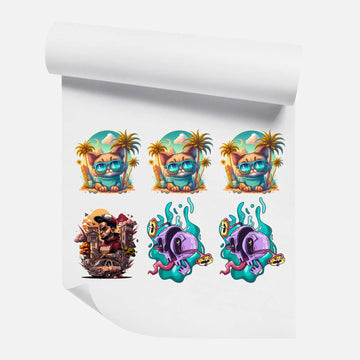
Because infant designs are small — typically 3 to 6 inches wide — they tile very efficiently on a standard 22-inch wide DTF gang sheet. A sheet that holds 6 adult chest designs might hold 20 or more infant onesie designs at the same sheet cost. This makes gang sheet ordering especially cost-effective for baby apparel producers.
For Etsy sellers carrying multiple infant designs, arrange your full design library on a single gang sheet rather than ordering each design separately. At high tile density, per-transfer cost on infant designs drops significantly. Use the gang sheet builder to build your layout and see the per-transfer cost before placing the order.
For custom one-off baby shower gifts or birth announcement onesies with personalized names and dates, each design is unique — arrange all personalized transfers on one sheet, organized by the baby's onesie size, and label each transfer on the sheet so you know which name goes on which size onesie.
Popular Baby Apparel DTF Design Categories
Birth Announcement and Name Onesies
Personalized birth announcement onesies — featuring the baby's name, birth date, weight, and length — are one of the most popular custom baby apparel categories. These designs are unique for every order, which makes DTF transfers the most practical production method: no screen setup, no minimums, press one onesie at a time as orders come in.
Baby Shower and Gender Reveal Apparel
Baby shower events often include custom onesies as gifts or party favors — matching onesie sets for the baby's first holidays, "Future [Profession]" novelty onesies, family nickname onesies. Gender reveal parties use color-coded designs revealed at the event. These are typically small-quantity orders (one to six onesies) that DTF transfers handle at the same per-unit cost as larger runs.
Sibling Matching Sets
Matching "Big Sister" / "Little Sister" or "Big Bro" / "New Baby" sibling sets are popular with family portrait photographers and custom apparel shops. These sets often include both a youth or toddler shirt for the older sibling and a onesie for the infant — which means pressing two different garment sizes from the same design family. Arrange both the toddler-sized transfer and the infant-sized transfer on the same gang sheet.
Boutique Baby Clothing Brands
Small boutique baby clothing brands selling on Etsy, Shopify, or at local markets use DTF transfers to produce custom printed apparel without owning a DTF printer. The workflow is straightforward: design the artwork, order the transfers, press onto blank onesies and baby tees, photograph, and list. No inventory of pre-printed blanks — press to order as sales come in, keeping overhead low.
Wash Care for DTF-Printed Baby Clothes
Parents wash baby clothes constantly — often daily. A DTF transfer on a onesie needs to hold up through that wash frequency without fading or peeling. The wash care instructions are the same as for adult apparel: machine wash cold, garment inside out, low heat or air dry.
The most common reason DTF transfers on baby clothes fail early is high dryer heat. Caregivers unfamiliar with heat transfer care often dry baby clothes on high heat, which softens and breaks down the adhesive bond over time. Include wash care instructions with every custom baby apparel order — a simple card or tag noting "wash cold, low heat dry" is enough to set the expectation and protect the print.
Full wash care instructions are in our DTF wash and care guide.
Frequently Asked Questions
Can DTF transfers go on newborn onesies?
Yes. DTF transfers bond to newborn onesie fabric (ribbed cotton knit, typically 100% cotton or cotton-poly blend) using standard infant settings: 295 to 310°F, 10 to 12 seconds, medium pressure. The key adjustments are using a pressing pillow to handle the snap closures and sizing the design appropriately — 3 to 4 inches wide for newborn onesies.
What size should a design be for a baby onesie?
For a 0 to 3 month onesie, design width of 3 to 4 inches. For 6 to 12 months, 4 to 5 inches wide. For 12 to 24 months, 4.5 to 6 inches wide. For 2T to 4T toddler sizes, 6 to 7.5 inches wide. Always size the design to fit within the usable chest area of the specific onesie size you are pressing, leaving at least 1 inch of clearance from sleeve seams on each side.
Are DTF transfers safe for babies?
DTF transfers that have been fully pressed and cured according to instructions are a physical print on the outside of the garment and do not contain any free-floating particles or substances that contact infant skin through normal wear. The adhesive and ink are bonded to the fabric surface when correctly applied. As with any decorated apparel, wash new items before dressing an infant and follow standard garment care instructions.
How many baby onesie designs can fit on one gang sheet?
A 22 x 24 inch gang sheet can typically hold 15 to 25 infant onesie designs (3 to 5 inches wide) depending on how efficiently they tile. Small, compact designs tile very efficiently on a gang sheet, making infant apparel one of the most cost-effective product categories per transfer when ordered via gang sheet.
Add Baby Apparel to Your DTF Product Line
Baby and infant apparel is one of the most emotionally driven purchase categories in custom printing — parents, grandparents, and gift-givers consistently spend on personalized baby items. If you are already pressing DTF transfers on adult apparel, adding onesies requires only a pressing pillow and correctly sized artwork.
Start building infant transfer layouts in the gang sheet builder to see how efficiently baby designs tile per sheet. Or order a sample pack to test the press process on your onesie blanks before adding infant apparel to your shop.


