





DTF Printing on Nylon and Synthetic Fabrics
One of the most common questions from decorators expanding beyond standard t-shirts is whether DTF transfers work on nylon, polyester, spandex, and synthetic fabric blends. The short answer is yes — DTF transfers bond to synthetic fabrics including nylon, polyester, and poly-spandex blends. The longer answer is that synthetic fabrics require adjusted heat press settings and a bit more attention during application than standard cotton, because the materials behave differently under heat.
This guide covers what you need to know before pressing DTF transfers onto nylon jackets, polyester jerseys, athletic wear, windbreakers, swim bags, and other synthetic items — the right temperatures, how to prep the fabric, what adhesion looks like on different synthetics, and how to test before committing to a full production run.
Why Synthetic Fabrics Require Different Settings
Cotton and cotton-poly blends are the most forgiving fabrics for DTF pressing because they tolerate the standard pressing temperature (300 to 320°F) without distortion and their fiber structure bonds well with the hot-melt adhesive. Synthetic fabrics — nylon, polyester, spandex, and various performance blends — have lower heat tolerance and different surface chemistry than cotton.
Applying too much heat to synthetic fabrics causes three problems: fabric scorching or melting (especially on thin nylon), dye migration (sublimation dyes in polyester fabrics can bleed into the transfer at high temperatures, causing ghosting or color contamination), and fabric deformation where the material stretches, puckers, or develops a shiny heat mark from the platen.
The solution is not to avoid synthetics — it is to reduce temperature and sometimes increase press time slightly to compensate, then test before production. Our DTF heat press settings guide provides the baseline settings for cotton; this post covers the adjustments needed for synthetics.
DTF on Polyester Fabrics
Polyester is the most common synthetic fabric in the apparel market — athletic jerseys, moisture-wicking performance shirts, fleece, and sublimated sportswear are all typically high-polyester or 100% polyester. DTF transfers bond to polyester when pressed correctly, but polyester presents one specific challenge that cotton does not: dye migration.
Understanding Dye Migration on Polyester
Polyester fabrics — particularly brightly colored ones — contain sublimation dyes that are heat-sensitive. When pressed at high temperatures, these dyes can migrate upward through the DTF transfer layers, discoloring the ink. This typically appears as a pinkish, reddish, or yellowish tint on white or light-colored areas of the transfer design — most visible on the white underbase ink layer.
Dye migration is most common on bright red, orange, royal blue, and athletic green polyester fabrics. White, light grey, and dark polyester (black, navy) are less prone to migration because either the dye concentration is low or the dark fabric color does not contrast visibly with the migration tint.
Pressing DTF on Polyester: Settings and Approach
To minimize dye migration on polyester, press at a lower temperature for a slightly longer time rather than at the standard cotton temperature. Recommended starting point:
● Temperature: 270 to 290°F (132 to 143°C)
● Time: 12 to 15 seconds
● Pressure: Light to medium — polyester compresses differently than cotton, and excessive pressure can leave platen marks on smooth athletic fabric
A parchment paper or Teflon sheet between the platen and the garment helps prevent platen marks on smooth polyester. After peeling, do a brief second press at the same settings through a parchment sheet to set the adhesive.
Always test on a scrap piece of the same polyester fabric before pressing a production run. If dye migration appears after the test press, reduce temperature by 5 to 10°F and test again. If migration persists at very low temperatures, consider whether this fabric is suitable for DTF or if the garment needs a different decoration method.
High-Polyester Athletic Jerseys
Decorated athletic jerseys for sports teams are a common DTF application. Team jerseys are typically 100% polyester or a high-polyester performance blend, and they often come in bright colors prone to dye migration. For jersey decoration, the lower temperature approach (270 to 285°F) with a longer press time (15 seconds) is the standard starting point.
DTF transfers on athletic jerseys produce clean, durable team logos and player names that hold up through repeated washing and athletic use. For sports team orders, see our DTF transfers for sports teams guide for additional tips on decorating jerseys and uniforms at volume.
DTF on Nylon Fabrics
Nylon is a more delicate synthetic than polyester and is commonly found in windbreakers, rain jackets, nylon athletic shorts, bags, backpacks, and some outerwear shells. Nylon has a lower melting point than polyester and burns or deforms at temperatures that cotton handles comfortably — making it the most technically demanding common fabric for DTF application.
Can DTF Transfers Bond to Nylon?
Yes, DTF transfers can bond to woven nylon fabrics. The hot-melt adhesive bonds to the nylon fiber surface when sufficient heat is applied. However, because nylon's safe heat threshold is lower than cotton or polyester, the pressing window is narrow — too little heat and the adhesive does not bond; too much and the nylon scorches or melts.
The surface of woven nylon is also smoother than cotton, which affects how well the adhesive penetrates the fiber structure. DTF transfers on nylon may not achieve the same bond strength as on cotton, and the finished transfer may be slightly easier to peel at the edges if the adhesive did not fully penetrate the fabric surface.
Pressing DTF on Nylon: Settings and Technique
Nylon pressing requires the lowest temperatures in the DTF range and careful pressure management. Starting point:
● Temperature: 250 to 275°F (121 to 135°C)
● Time: 10 to 15 seconds — start at 10, test, add time if adhesion is incomplete
● Pressure: Light — nylon fabrics can develop permanent platen impressions under firm pressure, especially on coated or laminated nylon shells
Always test on a sample piece of the identical nylon fabric before pressing production items. Nylon specification varies significantly between manufacturers — a thin ripstop nylon windbreaker and a heavier oxford-weave nylon bag behave very differently under a heat press. The test press tells you what the specific material tolerates.
For nylon bags and backpacks that have internal structure or foam padding, use a pillow press attachment or stuff the bag firmly with heat-resistant material to create a flat, even pressing surface inside the item. Without a firm backing, the nylon surface flexes under platen pressure and the transfer may not bond evenly.
Coated and Laminated Nylon
Some nylon items — waterproof rain jackets, coated nylon bags, duffel bags with DWR (durable water repellent) coatings — have surface treatments that affect DTF adhesion. Coatings and laminates reduce the porosity of the fabric surface, which limits how well the hot-melt adhesive penetrates and bonds.
For coated nylon, adhesion is possible but typically weaker than on uncoated fabric. The transfer may bond at the surface but lift more easily at edges when flexed. For items that will be folded or heavily used — packable jackets, stuff-sack bags — test the adhesion thoroughly before offering coated nylon decoration as a production service.
DTF on Spandex and Stretch Blends
Spandex (elastane) is rarely used as a standalone fabric but appears as a blend component in athletic wear, leggings, compression shorts, swimwear, and yoga pants — often as 10 to 20% spandex in a polyester or nylon base. DTF transfers on high-stretch fabrics work, but the stretch behavior of the fabric after pressing is something to consider.
When a DTF transfer is pressed onto a spandex blend, the transfer itself does not stretch — the ink layer and adhesive are not elastic. When the garment is stretched during wear, the transfer area resists that stretch more than the surrounding fabric. On moderate-stretch fabrics (10 to 15% spandex), this is usually not a problem for typical apparel use. On high-stretch fabrics like compression leggings or swimwear (20 to 40% spandex), the differential stretch can cause the transfer edges to crack or lift over time with repeated use.
For athletic leggings and similar high-stretch items, DTF transfers work best in placement areas that do not experience maximum stretch during movement — the outer thigh, the calf, or a side seam panel position rather than directly across the knee or hip. Smaller transfer sizes also hold up better on stretch fabrics than large chest-spanning designs.
Fabric Prep for Synthetic DTF Transfers
Fabric preparation matters more on synthetics than on cotton because synthetics are more likely to have surface treatments, moisture absorption issues, and texture inconsistencies that affect adhesion.
● Pre-press: Always pre-press synthetic fabrics for 3 to 5 seconds at your intended press temperature before applying the transfer. This removes surface moisture and any residual fabric finishing treatments. Synthetics, especially performance fabrics, often have moisture-wicking finishes that need to outgas before transfer application.
● Clean surfaces: Nylon and polyester can carry fabric softener residue from washing that coats fibers and reduces adhesion. If you are pressing on pre-washed or laundered garments, pre-pressing with steam off and a clean Teflon sheet helps remove surface residue.
● Firm backing: For any synthetic item that does not lie flat naturally — bags, jackets with inner linings, structured items — use a pressing pillow or silicone insert to create an even, firm pressing surface inside the item before closing the platen.
Testing Before Production
The single most important step when working with synthetic fabrics is testing before pressing any production items. A test press on the same fabric, at the same settings, with a similarly sized transfer tells you everything you need to know about whether that specific fabric and setting combination will work.
What to check after a test press on synthetic fabric:
● Adhesion: Gently try to peel a corner of the transfer after it has cooled. It should resist firmly. If it lifts easily, increase temperature by 5°F or extend press time by 2 seconds and test again.
● Dye migration: On brightly colored polyester, check whether the white areas of the transfer show any discoloration after pressing. Migration shows as a subtle tint in the white underbase areas.
● Fabric condition: Check the fabric surface around and beneath the transfer. There should be no scorch marks, shine, deformation, or flattened texture.
● Stretch behavior: On spandex blends, gently stretch the fabric in the transfer area after it cools. The transfer should flex slightly without cracking at the center. Edge lifting on extreme stretch is acceptable for moderate-stretch fabrics.
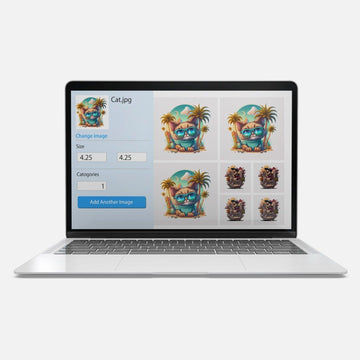
Use the gang sheet builder to order a small test batch of your design before ordering a full production run on synthetic items.
Wash Care for DTF on Synthetic Fabrics
Wash care for DTF-printed synthetic fabrics follows the same guidelines as cotton with one addition: avoid high dryer heat. Synthetic fabrics retain heat more than cotton and dryer heat can soften the DTF adhesive bond over time, reducing longevity. Air drying is the safest option for DTF-printed athletic wear, nylon jackets, and high-polyester items. Machine wash cold, garment inside out, is the standard guidance. Full wash care instructions are in our DTF wash and care guide.
Frequently Asked Questions
Can DTF transfers go on nylon jackets?
Yes. DTF transfers bond to woven nylon jackets when pressed at reduced temperatures (250 to 275°F) with light to medium pressure. Because nylon has a lower heat tolerance than cotton, temperature management is critical — always test on a scrap piece of the same nylon before pressing production items. Coated or DWR-treated nylon jackets may have weaker adhesion due to surface treatments.
Do DTF transfers work on 100% polyester?
Yes. DTF transfers bond to 100% polyester with adjusted settings (270 to 290°F, 12 to 15 seconds). The main consideration on brightly colored polyester is dye migration — sublimation dyes in the fabric can bleed into the transfer at higher temperatures, tinting white areas of the design. Lower temperature and a test press on the specific fabric color you are using identifies any migration risk before production.
Will a DTF transfer crack on stretchy fabric?
On moderate-stretch fabrics (up to 15% spandex), DTF transfers hold up well through normal wear and washing. On high-stretch fabrics (20% or more spandex), large transfers can develop edge lifting or fine cracking at extreme stretch points over time. Placing smaller transfers in lower-stretch areas of the garment — outer thigh, calf, side panels — reduces this risk on compression and athletic stretch fabrics.
What temperature should I use for DTF on athletic wear?
Start at 270 to 285°F for polyester athletic wear, 250 to 275°F for nylon athletic shorts or windbreakers. These are starting points — always test on a scrap piece of the specific fabric at your intended settings before pressing production items. Light to medium pressure prevents platen marks on smooth athletic fabric surfaces.
Expand Your DTF Decoration Beyond Cotton
Synthetic fabrics open up a significantly larger product category for DTF decoration — athletic wear, outerwear, bags, accessories, and performance apparel that cotton-focused shops do not offer. The adjustments required are not complicated: lower temperature, careful testing, attention to fabric-specific characteristics.
Once you have tested and confirmed your settings for a specific synthetic fabric, the production process is the same as pressing on cotton. Order test transfers through the gang sheet builder to validate your settings before committing to a larger run. If you have questions about a specific fabric type or item, reach out through the contact page — we can advise on whether a particular material is a good candidate for DTF decoration.


