


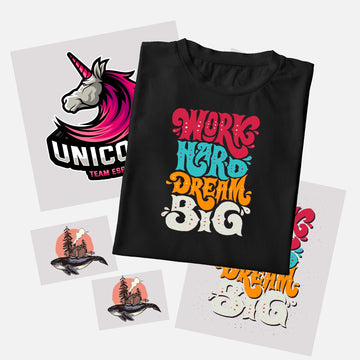
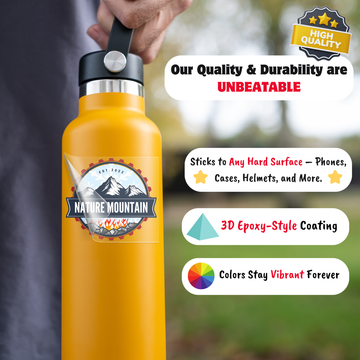
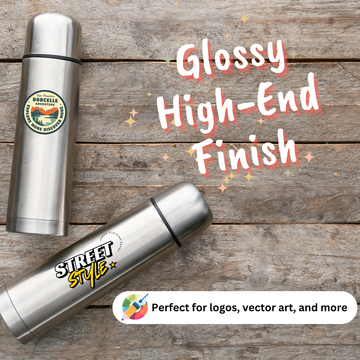
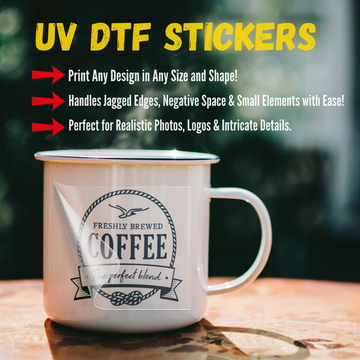


You’ve probably seen it — a sharp, full-color design sitting clean on a stainless steel tumbler, a glass jar, or a hardcover notebook, with no sign of transfer edges or peeling corners. That’s UV DTF printing, and right now it’s one of the fastest-growing techniques in the custom products industry.
But what actually is UV DTF? How does it differ from the DTF printing used for garments? And — most importantly — does it make sense for what you want to create or sell?
This guide covers the process from start to finish, the surfaces it works on, the limitations worth knowing, and a clear answer on whether it suits your product line.
What Is UV DTF Printing?
UV DTF — short for Ultraviolet Direct-to-Film — is a printing method that uses UV-curable inks to produce ready-to-apply UV DTF transfers for hard, rigid surfaces. Glass, ceramic, aluminum, acrylic, wood, plastic, leather — if it has a smooth surface, UV DTF can decorate it.
Unlike standard DTF printing — which is built for fabric and requires a heat press — UV DTF transfers are applied cold, by hand. No heat press. No pretreatment. You peel the backing, press the transfer onto the surface, and the design bonds.
The UV element refers to the curing process: as the printer lays down ink, an ultraviolet lamp immediately hardens it in place. This produces a slightly raised, tactile finish — you can actually feel the design — with vivid color that resists fading.
How Does UV DTF Printing Work? (The Full Process)
The process is simpler in practice than the technology behind it suggests. Here’s each step:
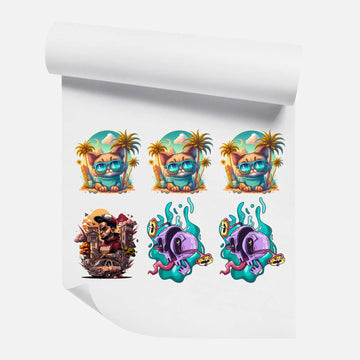
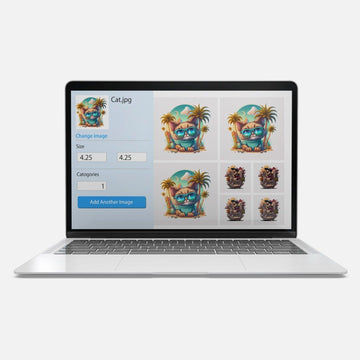
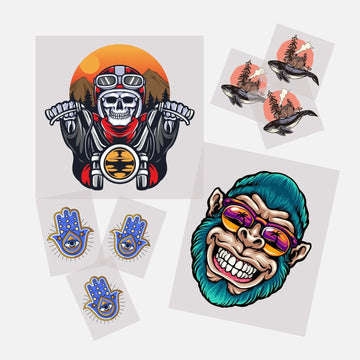
• Design setup: Artwork is prepared and sized for the target surface — a wrap-around for a 20oz tumbler, a sticker-style decal for a laptop lid, or a panel print for a notebook cover. You can use our UV DTF Gang Sheet Online Builder to lay out multiple designs on a single sheet and keep costs down.
• Printing onto film: A UV DTF printer deposits CMYK color inks, a white ink base layer, and an adhesive layer onto a PET film. The UV lamp cures each layer almost instantly as the printhead passes over it.
• Lamination: A clear laminate film is pressed over the printed surface, bonding everything together and protecting the design.
• Application: The laminate liner peels away to reveal the sticky adhesive side. You position the transfer on your surface, press firmly from the center outward, then peel off the carrier film — leaving the design permanently adhered.
From peel to finished product takes under a minute. No specialist equipment is required on your end, which makes UV DTF particularly useful for print-on-demand sellers, small decorators, and anyone fulfilling custom orders in-house without a full printing setup.
UV DTF vs. Regular DTF Printing: The Key Differences
The names are similar, but these are two different tools for two different jobs.
Surface compatibility: Regular DTF transfers are designed for fabric — cotton, polyester, blends, nylon. UV DTF is designed for hard, non-porous surfaces. Applying a UV DTF transfer to a soft cotton tee won’t work. Applying a standard DTF transfer to a ceramic mug won’t either.
Application method: Standard DTF requires a heat press at around 320°F. UV DTF is cold application — peel and press by hand.
Texture and finish: UV DTF has a raised, glossy or matte finish depending on settings — you can physically feel the design. Standard DTF on garments integrates more softly into the fabric.
Durability: Standard DTF on fabric holds up through many machine-wash cycles. UV DTF on hard surfaces is scratch-resistant and waterproof but holds up best with hand washing — dishwasher heat and detergents can degrade adhesion over time.
What Surfaces Work With UV DTF Transfers?
This is where UV DTF really opens up your product range. It adheres well to:
• Stainless steel and aluminum tumblers (Stanley, YETI-style, and similar)
• Glass jars, wine glasses, pint glasses, and mason jars
• Ceramic mugs, tiles, and plates
• Acrylic, hard plastic, and PVC surfaces
• Painted or sealed wood and MDF boards
• Laptop cases and hard-shell phone cases
• Leather wallets, keychains, and bag panels
• Hardcover books and journal covers
Where it doesn’t work: soft, stretchy, or heavily textured fabric. Also avoid raw, unsealed porous wood or concrete-style rough surfaces — if the transfer can’t make full contact, adhesion will be inconsistent and edges may lift over time.
Is UV DTF Printing Right for Your Business?
The honest answer depends on what you’re making. Here’s a clear breakdown:
UV DTF is a strong fit if you:
• Sell custom drinkware and want photo-quality prints without investing in sublimation equipment or a UV flatbed printer
• Run a print-on-demand or Etsy-style shop and need fast turnaround on individual custom orders
• Offer small-batch custom gifts — wedding favors, corporate giveaways, event merchandise — across a mix of product types
• Want to expand your product catalog without buying new decorating equipment on your end
UV DTF is not the right fit if you:
• Primarily print on garments — standard DTF transfers or screen printing will serve you better
• Need prints that flex, stretch, and survive heavy machine washing on fabric
• Are working with very rough, porous, or irregular surfaces where reliable adhesion isn’t possible
For many businesses, the smarter play is using both. Standard DTF handles apparel. UV DTF handles hard goods. Together they cover most of the custom merchandise market without you needing to own a printer for either.
Frequently Asked Questions About UV DTF Printing
How long do UV DTF transfers last?
When applied to a clean, smooth surface, UV DTF transfers are durable — resistant to scratching, moisture, and UV fading under normal use. On drinkware that’s hand-washed regularly, prints typically hold up for years. Dishwasher cycles can gradually weaken adhesion, so hand washing is recommended to get the longest life out of them.
Do UV DTF transfers work on curved surfaces like tumblers?
Yes — this is one of UV DTF’s core advantages. The film is thin and flexible enough to wrap cylindrical surfaces like tumblers and bottles cleanly, without creasing or bubbling, as long as you work from one edge and smooth toward the other during application.
Is there a minimum order quantity for UV DTF printing?
No. Because UV DTF is a digital process with no screens or plates to set up, you can order a single transfer or a full UV DTF gang sheet with multiple different designs. This makes it practical for one-off personalizations, small custom orders, and samples.
Can I apply UV DTF transfers myself, or do I need equipment?
You can do it yourself with no specialist equipment. A clean surface, firm hand pressure, and something flat like a credit card or squeegee to remove air bubbles is all you need. See our video tutorials and application instructions for a step-by-step walkthrough. Most people have the application down to under 30 seconds after a few tries.
Ready to Add UV DTF to Your Next Order?
UV DTF printing has genuinely expanded what’s possible for small-batch custom products — especially in the drinkware, giftware, and hard goods space. The print quality is high, the application is simple, and the range of surfaces it works on is wider than most people realize.
At DTF Print, we produce UV DTF transfers alongside standard DTF gang sheets — so whether you’re decorating tees, tumblers, or both, you can handle it in a single order. Upload your artwork to get started, or get in touch if you have questions about your project.


