




You want full-color prints on custom apparel. Two methods come up over and over: DTF printing and sublimation printing. Both produce vivid results. Both are used by serious decorators and print shops worldwide. But they work very differently — and choosing the wrong one for your garments will cost you time, money, and unhappy customers.
This isn't a case of one being better than the other across the board. It's a case of understanding what each method is actually built for. Here's a straight comparison — fabric types, durability, color range, minimum orders, cost, and feel — so you can make the right call before you place your next order.
The Short Answer
DTF printing works on virtually any fabric — cotton, polyester, blends, nylon, dark colors, light colors. Sublimation works only on polyester (or polyester-coated surfaces) and only on white or very light-colored items.
If you're printing on 100% cotton tees, dark hoodies, or a mixed product range, DTF is the practical choice. If you're printing full-panel all-over designs on white polyester performance wear or sportswear, sublimation gives you a softer, seamless result.
For most small businesses and print-on-demand operations, DTF is the more flexible option. Sublimation shines in specific, narrower use cases. Let's dig into why.
What Is DTF Printing?
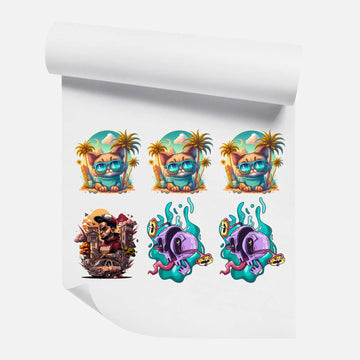
DTF — Direct-to-Film — printing produces a transfer by printing your design onto a special PET film, applying a hot-melt adhesive powder, and curing it. The finished transfer is then pressed onto your garment with a heat press at around 320°F for 10-15 seconds. The design bonds to the fabric and stays put through wash after wash.
Because the ink sits on top of the fabric rather than dye-sublimating into the fibers, it works on any fabric color or composition. A white ink base layer is printed first, which means you can get bright, accurate colors on black, navy, red — any garment color.
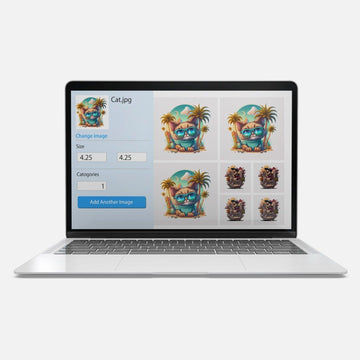
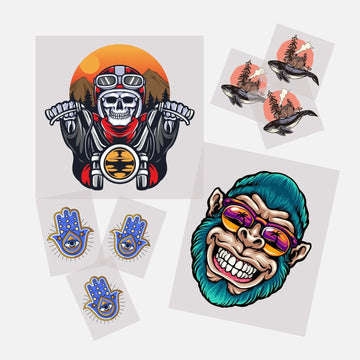
You can order DTF transfers by size and quantity, build a DTF gang sheet online to fit multiple designs on a single sheet, or upload a ready-to-print gang sheet if you already have your file laid out.
What Is Sublimation Printing?
Sublimation printing uses heat to convert solid dye into gas, which then bonds directly into polyester fibers. The result is a print that's actually part of the fabric — not a layer sitting on top. There's no transfer film, no raised texture, nothing to peel.
The catch: it only works this way on polyester. On cotton, the dye has nothing to bond to and won't hold. And because the dye is transparent, it won't show up on dark fabrics — printing sublimation on a black shirt produces nothing visible at all. You need white or very pale polyester as your base for accurate colors.
DTF vs. Sublimation: Head-to-Head Comparison
1. Fabric Compatibility
DTF: Works on cotton, polyester, poly-cotton blends, nylon, canvas, and more. Works on any color garment — light or dark. This is its biggest advantage for apparel decorators.
Sublimation: Requires 95-100% polyester for best results. Poly-cotton blends will give you a washed-out, faded look. Dark fabric is a non-starter. If your product range goes beyond white polyester, sublimation creates serious limitations.
2. Print Feel and Texture
DTF: Has a slight raised feel — you can tell there's a transfer on the shirt, especially on detailed designs. Modern DTF prints are much softer and thinner than they were a few years ago, but there's still a tactile layer present.
Sublimation: Completely smooth and soft — the print is inside the fabric, not on top of it. For all-over pattern printing on athletic wear or swimwear, this gives a premium, seamless finish that DTF can't fully replicate.
3. Color Range and Vibrancy
Both methods produce full-color, unlimited-color prints with no per-color pricing. Photo-realistic designs work well on both — with one caveat: DTF uses a white ink base to achieve color accuracy on dark fabrics, while sublimation relies entirely on the white of the fabric to make colors pop. On white polyester, sublimation colors can be slightly more vivid and luminous. On any other fabric or color, DTF wins.
4. Washability and Durability
Both methods hold up well through repeated washing when applied correctly. Sublimation technically has a slight edge in longevity since the dye is fused into the fiber rather than bonded on top — there's nothing to crack or peel. DTF prints are highly durable but can show very fine cracking after many high-heat washes if the application isn't perfect. Wash inside-out at 30-40°C and both will last years of regular wear.
5. Minimum Order and Setup
DTF: No minimum order. You can order a single transfer or try a free DTF sample pack before committing to larger quantities. No screens, no plates, no setup fees. One design or fifty different designs — the process is the same.
Sublimation: Also digital with no setup minimums, but because it's typically done inline (printing directly onto the fabric via a wide-format printer, or via a dye-sub transfer), it's less suited to single-piece custom orders unless you have your own equipment. At print services, minimum orders often start at 6-12 pieces to keep it economical.
6. Cost Per Print
At low volumes (1-24 pieces), DTF transfers are very cost-effective — especially on a gang sheet where you're nesting multiple designs. At high volumes on polyester blanks (100+ units of the same design), sublimation can edge ahead on unit cost depending on your setup. For mixed-SKU or small-batch custom orders, DTF is almost always more practical on pricing.
So Which One Is Right for Your Order?
Choose DTF if you:
• Are printing on cotton, cotton-blend, or dark-colored garments
• Need small quantities or one-off custom orders (no minimums)
• Have customers who want the same design on different shirt colors
• Want left-chest prints, sleeve prints, or placement designs — not all-over coverage
• Don't own a heat press — DTF transfers can be applied with a commercial press or outsourced entirely
Choose sublimation if you:
• Are printing all-over, edge-to-edge designs on white polyester performance shirts, jerseys, or swimwear
• Prioritize the softest possible feel — no detectable print layer
• Are working exclusively with light-colored polyester blanks in consistent runs
Many decorators and online sellers use both — DTF for their everyday cotton tees, hoodies, and mixed orders, and sublimation for specific polyester athletic lines. They're complementary, not competing.
Frequently Asked Questions
Can you use DTF printing on polyester?
Yes. DTF works on polyester just as well as cotton. In fact, on dark polyester — such as black athletic shirts — DTF is the better choice over sublimation, which won't show on dark fabric at all.
Does DTF printing crack or peel over time?
Not when applied correctly. DTF prints pressed at the right temperature, pressure, and time hold up through years of washing. To extend the life of any print — DTF or sublimation — wash inside-out on a gentle cycle at low temperature and avoid tumble drying on high heat.
Which is better for dark-colored shirts?
DTF, without question. Sublimation is transparent by nature — it relies on the white of the fabric to make colors visible. On a black or navy shirt, sublimation prints are virtually invisible. DTF uses a white underbase layer that makes colors accurate and vivid on any fabric color.
Can I order DTF transfers without a minimum quantity?
Yes. At DTF Print, there's no minimum. You can order a single DTF transfer by size, or grab a free sample pack to test the quality before ordering in volume. If you have questions about which size or setup works for your garments, our FAQ page covers the most common ones.
Ready to Order Your DTF Transfers?
For most custom apparel needs in 2026 — especially anything on cotton, dark fabrics, or low-volume mixed orders — DTF printing is the more practical, flexible, and cost-effective choice. It removes the fabric-type restrictions that sublimation imposes and opens your product range to virtually any garment your customers want.
At DTF Print, we ship same-day on orders placed before cutoff, with no minimums and no setup fees. Build your gang sheet online, order a single transfer, or get in touch if you're not sure what you need. We're based in Alpharetta, GA — walk-ins welcome at North Point Mall.


