

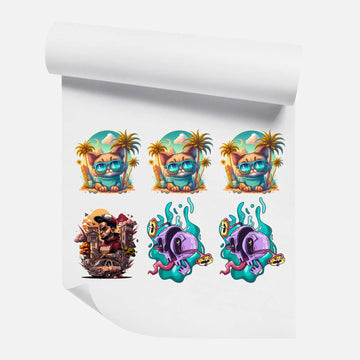
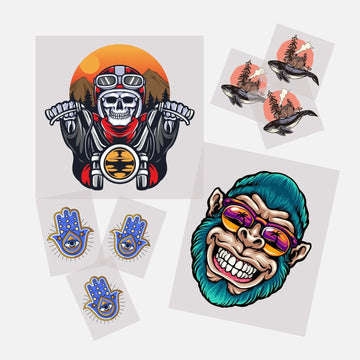



Custom apparel is a crowded market. Most printed shirts look the same — solid colors, flat graphics, standard finishes. Glitter DTF transfers are one of the few ways to make a design stop people mid-scroll or across a room, and they do it without the mess of loose glitter, without the stiffness of glitter HTV, and without any specialized equipment beyond the heat press you already own.
If you have been curious about glitter DTF but are not sure how it works, whether the sparkle actually lasts, or what kinds of designs it works best for, this guide answers all of it.
What Are Glitter DTF Transfers?
Glitter DTF transfers are a specialty variant of standard direct-to-film transfers. Instead of a regular clear or matte film, they use a glitter-embedded film as the base. When the design is printed and the adhesive layer is applied, the metallic glitter particles in the film become part of the finished transfer.
The result is a transfer that carries both your full-color printed design and a consistent glitter texture across the entire print area. When pressed onto a garment, the design has genuine sparkle — not a printed simulation of glitter, but actual reflective particles that catch light from multiple angles.
This is different from glitter heat transfer vinyl (HTV), which is a solid sheet of glitter-coated vinyl that you cut and weed into a shape. Glitter HTV is limited to solid shapes and single-color designs. Glitter DTF handles full-color artwork, photographic detail, gradients, and fine lines — the same complexity that standard DTF handles — but with a glitter finish layered over the entire design.
How Glitter DTF Differs from Standard DTF
Standard DTF and glitter DTF follow the same production process up to a point. The artwork is printed onto a film using CMYK inks plus a white underbase, then a hot-melt adhesive powder is applied and cured. The difference is entirely in the film itself.
Standard DTF film is clear or slightly translucent, which lets your design colors show through with full accuracy. Glitter DTF film has fine metallic glitter particles embedded in or coated onto the film surface. Those particles become visible through and around the printed ink, creating a shimmer effect across the entire design.
Because the glitter is in the film rather than applied on top of the ink, it does not wash off, flake over time, or create the rough texture that loose glitter products tend to develop after repeated washing. The sparkle stays consistent because it is bonded into the transfer structure itself.
What Glitter DTF Looks Like on a Garment
The visual effect varies depending on the artwork and the glitter film color, but in general, glitter DTF transfers produce a design that:
● Catches light and sparkles visibly from multiple angles — not just straight-on
● Shows your full-color design with the glitter shimmer layered over and through it
● Has a slightly raised texture compared to standard DTF, which gives the print a tactile quality
● Pops especially well on dark garments where the contrast between the design and the fabric is high
Gold and silver glitter films are the most common. Gold glitter DTF works particularly well with warm-toned designs — oranges, reds, yellows — while silver glitter complements cool tones and works cleanly with white, black, and blue artwork. The glitter does influence the perceived color of the design slightly, so bold, high-contrast artwork tends to read better than delicate pastels under a glitter layer.
What Designs Work Best with Glitter DTF
Not every design benefits from a glitter treatment. Knowing when to use it is as important as knowing how it works.
Designs That Work Well
● Logos and wordmarks for brands that want a premium, metallic look
● Event shirts — concerts, bachelorette parties, team celebrations, holiday events
● Kids and youth apparel where sparkle is part of the appeal
● Dance, cheer, and performance uniforms where stage lighting interaction matters
● Limited-edition or premium product lines where the finish justifies a higher price point
● Bold graphics with strong lines and high contrast — these hold their legibility through the glitter layer
Designs That Are Harder to Execute
● Artwork with very fine lines or tiny text — the glitter texture can slightly obscure micro-detail
● Photorealistic images where color accuracy is critical — glitter shifts perceived color
● Designs with large fields of pale, desaturated colors that may be visually overwhelmed by the sparkle
When in doubt, run the design on a standard DTF transfer first, see how it reads, then decide if the glitter version would add to it or compete with it.
Heat Press Settings for Glitter DTF Transfers
Glitter DTF transfers press similarly to standard DTF, but with a few adjustments worth knowing.
● Temperature: 305–315°F (151–157°C)
● Press time: 10–15 seconds
● Pressure: Medium-firm — same as standard DTF
● Peel: Follow the peel type specified for your transfer (hot or cold)
One important note: always use a cover sheet or parchment paper when pressing glitter DTF. Pressing the glitter film directly against a bare platen can leave adhesive residue on your press and damage the platen surface over time. A silicone or Teflon cover sheet protects both the print and your equipment.
Because the glitter film is slightly thicker than standard film, make sure your pressure is firm enough to achieve full contact across the entire design. Light pressure on a glitter transfer is a common cause of uneven adhesion — spots where the design bonds well and spots where it lifts after the first wash.
For a full breakdown of DTF heat press settings by garment type, see our guide on DTF heat press settings. The fabric-specific adjustments covered there apply to glitter DTF as well.
Durability: Does the Glitter Last?
This is the question most people have when they first consider glitter DTF. The concern is reasonable — anything labeled "glitter" brings to mind craft projects that shed particles all over everything and look worn after two washes.
Glitter DTF transfers behave differently. Because the glitter is embedded in the film rather than applied as a loose coating, it bonds to the garment through the same adhesive process as the rest of the transfer. The particles do not shed or flake during normal washing.
With proper care — cold water washing, inside-out, low or no heat in the dryer — glitter DTF transfers hold up comparably to standard DTF. The sparkle effect is retained through multiple wash cycles. The same wash care guidelines that apply to any DTF transfer apply here.
What can reduce the lifespan of a glitter transfer is the same as any DTF transfer: hot water washing, high-heat drying, and abrasive wash cycles. Treat glitter DTF shirts the same way you would treat any premium printed garment and the finish will last.
Glitter DTF vs. Glitter HTV: The Real Difference
If you have worked with glitter HTV before, it is worth understanding what makes glitter DTF a different product — not just a newer version of the same thing.
● Design complexity: Glitter HTV is cut vinyl — single shapes, no gradients, no photographic detail. Glitter DTF handles full-color artwork of any complexity.
● Production time: HTV requires cutting, weeding, and sometimes layering multiple pieces. Glitter DTF is press-ready — no preparation required on your end.
● Feel: Glitter HTV is a solid vinyl layer that sits on top of the fabric and feels plastic. Glitter DTF has a softer, more flexible feel because the transfer bonds with the fabric fibers rather than sitting on top of them.
● Edge quality: HTV edges can peel over time, especially on stretchy garments. DTF adhesive bonds across the full design area for more uniform durability.
● Color range: HTV glitter comes in a fixed set of pre-made colors — gold, silver, red, and a few others. DTF glitter film is overlaid on full-color printed artwork, so your design retains its original color range with the glitter shimmer on top.
For most custom apparel applications, glitter DTF is simply a more capable option. The only scenario where glitter HTV might win is if you need a very specific solid-color glitter shape with no other colors involved and want to produce it completely in-house.
How to Order Glitter DTF Transfers
At dtfprint.me, glitter DTF is available as a premium variant when ordering your transfers. Prepare your artwork as a transparent PNG at 300 DPI in RGB color mode — the same file requirements as standard DTF. The production process handles the glitter film automatically.
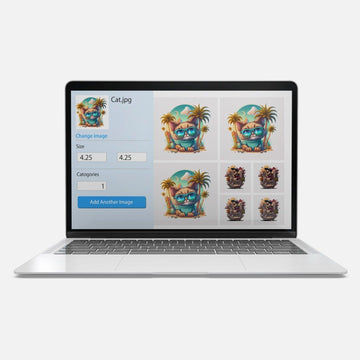
You can order glitter DTF through our DTF gang sheet online builder by selecting the glitter variant, or explore our full DTF transfer options by size and quantity. If you want to test the finish before placing a larger order, our DTF transfer sample pack is a low-commitment way to see how glitter DTF looks and feels on an actual garment.
Questions about which option is right for your project? Reach us through the contact page and we can help you figure out the right approach.
Frequently Asked Questions
Does glitter DTF shed or drop particles after washing?
No. The glitter is embedded in the transfer film, not applied as a loose coating. Once the transfer is pressed and bonded to the garment, the particles are part of the print and do not shed during washing when cared for properly.
Can I use glitter DTF on dark shirts?
Yes, and dark garments are actually where glitter DTF performs best. The contrast between the sparkle and a dark background makes the effect more visible. The white underbase in the DTF process keeps your colors accurate on dark fabric, so the full design reads clearly with the glitter shimmer on top.
Is glitter DTF more expensive than standard DTF?
Glitter DTF transfers are a premium product and are priced higher than standard transfers. The cost difference reflects the specialty film and production process. For event shirts, performance uniforms, or premium brand items where the finish adds perceived value, the additional cost is typically easy to pass on to the customer.
What file format do I need for glitter DTF?
The same as standard DTF: a PNG file with a transparent background, 300 DPI at your intended print size, in RGB color mode. The glitter effect comes from the film — your file preparation process does not change.
When Glitter DTF Makes the Most Sense
Glitter DTF is not for every order. It is a specialty finish that works best when the design, the audience, and the occasion call for something that stands apart from a standard print. For event merchandise, performance apparel, youth clothing, and premium limited runs, the sparkle effect creates real product differentiation that customers notice and remember.
If you have a design that would benefit from that kind of finish, glitter DTF is worth trying. Start with the sample pack, press it on the garment you plan to use, and see it in person before you scale up. The effect is difficult to fully appreciate on a screen — it makes a lot more sense the moment you hold it under a light.


