


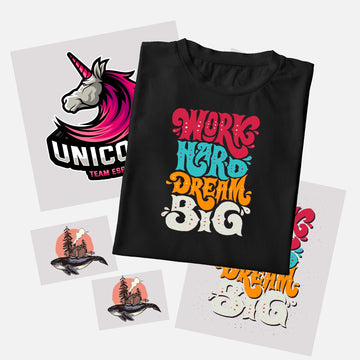


Embroidery has been the default decoration method for custom apparel for a long time — polo shirts, caps, workwear, and corporate uniforms have carried stitched logos for decades. Then DTF transfers came along and gave decorators a way to put full-color photographic-quality graphics on virtually any garment, fast, with no minimums and no setup costs.
Now the question comes up constantly: should I use DTF or embroidery for this order? The honest answer is that neither method is universally better. They are different tools with different strengths, and the right choice depends on your design, your garment, your budget, and your customer's expectations.
This guide breaks down both methods across every factor that actually matters so you can make the right call on any given job.
How Each Method Works
Embroidery
Embroidery uses a multi-needle machine to stitch thread directly into the fabric. Your artwork is converted into a digitized stitch file — a process called digitizing — that tells the machine exactly where to place each stitch, in what direction, and in what color. The machine then executes that file, needle by needle, building up your design in thread on the garment.
The result is a design that is physically part of the fabric — raised, textured, and tactile. Embroidery is widely recognized as a premium finish, particularly on structured items like hats, polos, and jackets.
DTF Transfers
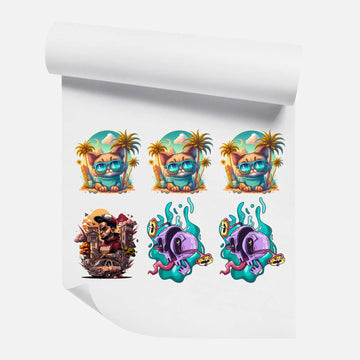
DTF (Direct-to-Film) printing produces a full-color transfer on a special film using CMYK inks and a white underbase. A hot-melt adhesive powder is applied and cured, creating a ready-to-press transfer. When heat and pressure are applied, the adhesive bonds the design to the fabric surface.
The result is a flat, flexible print that sits on the fabric rather than being stitched into it. DTF handles full-color artwork, gradients, photographs, and fine detail — anything that can be printed digitally. At dtfprint.me, transfers are available by size and quantity with no minimum order and same-day production for orders placed before cutoff.
Design Complexity: DTF Wins Easily
This is the clearest difference between the two methods, and it is not close.
Embroidery works in thread. Thread comes in a fixed set of colors, and each color in a design is a separate thread path. Solid fills, bold outlines, and clean geometric shapes translate well into stitches. But gradients cannot be embroidered — thread either is a color or it is not, with no blending between shades. Photographic images, fine text below about 8pt, and highly detailed artwork all lose significant quality when converted to embroidery. The digitizer has to simplify and stylize the artwork to make it work in thread, and the result is always a less detailed version of the original.
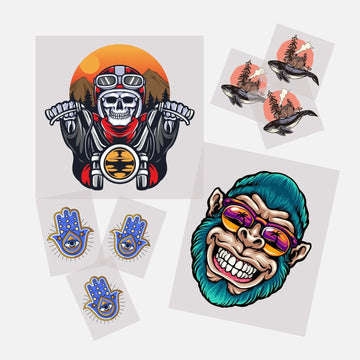
DTF transfers print your artwork exactly as it appears in the file. A 300 DPI PNG with gradients, shadows, photographic elements, and fine detail prints all of it cleanly. What you see on screen is what you get on the garment. There is no simplification, no color limit, and no detail loss.
If your design has more than 4 colors, any gradients, photographic elements, or fine details — DTF is the right method. Embroidery will not reproduce it accurately.
Cost: It Depends on Volume and Design
The cost comparison between DTF and embroidery is more nuanced than it might appear, because both methods have different cost structures.
Embroidery Costs
Embroidery has a one-time digitizing fee for each new design — typically $10 to $50 depending on complexity. After digitizing, the per-piece cost is based on stitch count and machine time. Simple left-chest logos with low stitch counts can be inexpensive at scale, but complex designs with high stitch counts get expensive quickly. Setup fees make small runs costly — ordering 6 embroidered polos with a new logo means paying the digitizing fee across very few pieces.
DTF Transfer Costs
DTF transfers have no digitizing fee and no setup cost. You pay only for the transfers themselves, priced by size and quantity. A single transfer costs more per piece than a high-volume embroidery run, but at low quantities — 1 to 24 pieces — DTF is almost always cheaper when you factor in the absence of setup fees.
The economics shift as order volume increases. At 100+ pieces with a simple 2-color logo, embroidery at scale can be cost-competitive. But for small runs, mixed sizes, multiple designs, or any design with color complexity, DTF wins on cost.
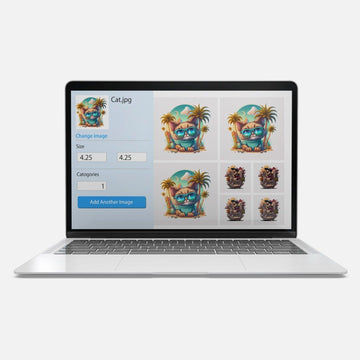
Using a DTF gang sheet — where multiple designs are arranged on a single sheet — reduces the per-transfer cost further, making DTF efficient even for varied orders with many different designs.
Minimum Orders: DTF Has None
This is a practical difference that matters enormously for small businesses, event organizers, and anyone decorating custom items in small quantities.
Embroidery has implicit minimums driven by the digitizing fee. Spending $25 on digitizing to embroider a single hat is hard to justify unless you plan to run that design again. Most embroidery shops also have explicit minimums — often 6 to 12 pieces per design — to make the machine setup time worthwhile.
DTF transfers have no minimum. You can order a single transfer, press it, and see exactly how your design looks before committing to more. Our DTF transfer sample pack takes this even further — it is a low-cost way to test the quality and feel of DTF on your specific garments before placing any production order.
For custom one-offs, personalized items, event merch in small quantities, or any situation where you need to produce fewer than a dozen pieces, DTF is the only practical option between the two.
Garment and Fabric Compatibility
Both methods work on a wide range of garments, but they have different strengths and limitations.
Where Embroidery Works Well
● Structured hats and baseball caps — the firm panel holds stitches cleanly
● Polo shirts and woven dress shirts — the fabric weight supports dense stitching
● Fleece jackets and workwear — thick fabric handles embroidery well
● Bags and accessories with stable, woven fabrics
Where Embroidery Struggles
● Thin or stretchy fabrics — stitching can pucker or distort the fabric
● Very lightweight performance fabrics — the backing required for embroidery can affect breathability and feel
● Items where the raised texture is undesirable — some customers dislike the feel of embroidery against skin
Where DTF Works Well
● T-shirts, hoodies, and sweatshirts — the most common use case
● Performance and athletic wear — DTF bonds to polyester and blends without the backing issues of embroidery
● Hats — with the right hat press, DTF on structured caps delivers full-color results embroidery cannot match
● Bags, totes, denim, and canvas items
● Any garment where a soft, flat finish is preferred over a raised stitched feel
Where DTF Has Limits
● Very rough or heavily textured surfaces where the transfer cannot make full contact
● Items that require the prestige of a stitched finish — some corporate clients specifically request embroidery
For most garment types, DTF is the more versatile option. You can see the full range of compatible materials in our FAQ about ordering.
Durability: Both Last, But Differently
Both embroidery and DTF can last the life of the garment when properly applied and cared for. They fail in different ways.
Embroidery is extremely durable at the thread level — the stitches themselves are woven into the fabric and do not peel or crack. However, thread can fray at edges over time, particularly on designs with dense fill stitching, and industrial washing can loosen or pull threads on garments that are not properly cared for. The backing material used during embroidery can also become scratchy or irritating as it ages.
DTF transfers, when pressed at the correct temperature and pressure, create a strong adhesive bond with the fabric fibers. The print flexes with the fabric rather than sitting rigidly on top, which resists cracking. With proper wash care — cold water, turned inside out, low heat drying — DTF prints hold up through 50+ wash cycles without significant fading or edge peeling.
The main vulnerability for DTF is improper pressing or wash care. A transfer pressed at too low a temperature, or one that goes through hot water washing repeatedly, will degrade faster. Follow the wash care guidelines in our DTF wash care guide and your prints will last.
Turnaround Time
For new designs, embroidery requires digitizing before anything can be stitched. Digitizing a simple logo takes a few hours; complex artwork can take longer, and revisions add more time. Production time for the actual stitching depends on stitch count and machine availability.
DTF transfers require no digitizing. You submit your artwork file, and transfers go into production immediately. At dtfprint.me, orders placed before the daily cutoff are ready for same-day shipping or local pickup. If you are pressing in-house, you can have finished garments the same day your transfers arrive.
For rush jobs or same-day needs, DTF is the clear choice. For ongoing programs where the same logo runs repeatedly and speed of initial setup is less critical, embroidery's turnaround becomes less of a disadvantage over time.
The Feel and Perceived Quality
This is subjective, but it matters to your customers.
Embroidery has a premium perception that is hard to argue with. The raised, stitched finish signals quality in a way that is immediately recognizable. On corporate polo shirts, branded workwear, and structured hats, embroidery reads as professional and substantial. Some clients specifically request it because it matches their brand expectations.
DTF transfers have a flat, smooth finish. On t-shirts and casual apparel, this is the expected and preferred look — nobody wants a raised, textured print on a soft cotton tee. But on items where embroidery is the traditional finish, DTF may not meet the expectations of clients who are accustomed to the stitched look.
The practical answer: ask your customer what they are expecting. For casual apparel, printed merch, and anything with design complexity, DTF is the right conversation. For structured corporate items where the stitched finish is part of the brand image, embroidery is worth the added cost and lead time.
Side-by-Side Summary
● Design complexity: DTF handles anything. Embroidery is limited to simplified, solid-color designs.
● Color count: DTF is unlimited full color. Embroidery is limited by available thread colors.
● Gradients and photos: DTF only. Embroidery cannot reproduce them.
● Minimum order: DTF has none. Embroidery has implicit minimums driven by digitizing cost.
● Setup cost: DTF has no setup fee. Embroidery requires digitizing per design.
● Small run cost: DTF wins at low quantities. Embroidery can win at high volume with simple designs.
● Turnaround: DTF is faster for new designs. Embroidery requires digitizing lead time.
● Durability: Both last well with proper care. Different failure modes.
● Feel: DTF is flat and soft. Embroidery is raised and textured.
● Prestige perception: Embroidery has a traditional premium reputation. DTF is preferred for modern, printed apparel.
Frequently Asked Questions
Is DTF cheaper than embroidery?
At low quantities and for complex designs, yes — DTF is almost always cheaper because there is no digitizing fee and no minimum order. At high volume with a simple logo, embroidery can be cost-competitive. The break-even point depends on stitch count and order size.
Does DTF look as good as embroidery?
For complex, multi-color, and photographic designs, DTF looks better — because embroidery cannot reproduce that detail accurately. For simple bold logos on structured items, embroidery has a premium raised finish that DTF does not replicate. Neither is objectively better; they produce different visual results.
Can I offer both DTF and embroidery to my customers?
Yes, and many decorators do. DTF handles the complex, colorful, casual apparel orders. Embroidery handles the corporate polo and structured hat orders where the stitched finish is expected. Having both options lets you take any job without turning work away.
Which is better for hats — DTF or embroidery?
It depends on the design. For simple 2-3 color logos, embroidery on a structured cap is a classic choice. For full-color graphics, gradients, photographic artwork, or fine detail, DTF on a hat with a hat press produces results embroidery simply cannot match. See our full guide on DTF printing on hats for hat-specific pressing details.
Which Should You Choose?
For most custom apparel businesses, the answer is not either/or — it is knowing when to use each. DTF is the right call for complex artwork, full-color designs, small quantities, fast turnaround, and any garment where a soft flat finish is preferred. Embroidery is the right call for simple bold logos on structured items where the raised stitched finish is part of the client's brand expectation.
If you are just getting started with DTF and want to see the quality before committing, order a DTF transfer sample pack and press a few pieces. Or build your first gang sheet online to see how efficiently you can produce a mixed order. Have questions about whether DTF is the right fit for a specific job? Contact our team and we will give you a straight answer.


