





You don't need a $10,000 printer to sell custom shirts. You don't need a garage full of equipment. With a DTF printing service doing the heavy lifting, you can run a legitimate custom apparel business from a laptop and a heat press — or even without that, if you go print-on-demand.
Here's exactly how it works, what it costs, and what pitfalls to dodge.
What Is DTF Printing and Why Does It Work for New Sellers?
DTF stands for Direct-to-Film. The process involves printing a design onto a special PET film, applying a hot-melt powder adhesive, curing it, and then heat-transferring the finished film to fabric.
The result is a full-color print with a soft feel and sharp edges — on virtually any fabric.
Compare that to older methods:
- Screen printing requires a minimum order of 12–24 pieces per design, plus setup fees per color.
- Heat transfer vinyl (HTV) is single-color or layered by hand — time-consuming, especially on complex artwork.
- Direct-to-garment (DTG) works best on 100% cotton. Polyester blends often produce washed-out results unless you pre-treat.
Custom DTF printing sidesteps all of that. You send a file, you get a gang sheet of transfers back, and you press them yourself — or pay someone to press them. No minimums. No color count limits. No special fabric requirements.
That's why DTF printing has become the go-to for new sellers, sports teams, small brands, and anyone testing a niche before committing to bulk production.
What You Actually Need to Get Started
The Short List
- A design (even a simple logo or text works)
- A DTF printing service that accepts one-off orders
- A heat press (optional if you use a press service)
- Blank garments
That's it. No printing hardware. No ventilation systems. No ink subscriptions.
Choosing Your Blank Garments
This is where most beginners make mistakes. Fabric choice directly affects your finished print.
100% cotton (like Gildan 64000 or Bella+Canvas 3001): DTF bonds well. Wash durability is excellent — most quality transfers survive 50+ washes without cracking when pressed correctly.
50/50 poly-cotton blends (like Gildan 8000): DTF still works, but you may see slight texture variation on the print surface because the polyester fibers sit differently. Pre-washing can help here.
100% polyester (performance wear, jersey fabric): DTF performs far better than DTG on polyester. No dye migration issues if you use a barrier sheet and keep press temps controlled. Critical: keep your platen temperature at 300–305°F rather than the standard 315°F used on cotton, and press for 10–12 seconds.
Nylon and nylon blends: Trickier. Some DTF transfers won't adhere to nylon without a low-temp formula. Always test before fulfilling an order.
Step-by-Step: From Zero to First Sale
Step 1: Create or Source Your Design
Your file should be:
- PNG with transparent background
- Minimum 150 DPI (300 DPI preferred for small or detailed designs)
- RGB color mode
Don't have design skills? Canva works. Adobe Express works. Hire someone on Fiverr for $10–30 if you need a more refined logo. The DTF transfer process reproduces gradients, photographic detail, and tiny text accurately — so a quality file will show up as a quality print.
Step 2: Order Your Gang Sheet
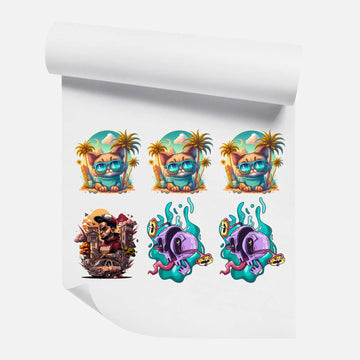
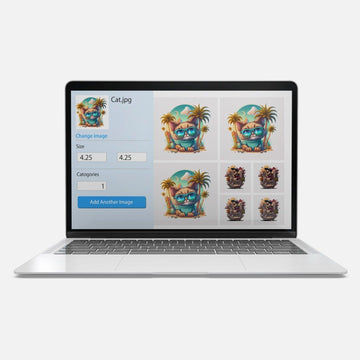
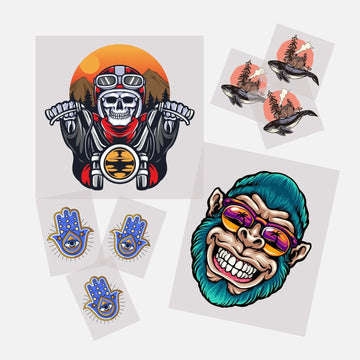
A gang sheet is a single sheet of film with multiple designs arranged on it to maximize material. Most t-shirt DTF printing services charge by the linear foot or sheet, so nesting multiple designs saves money significantly.
For example: a 22" × 12" sheet might cost $6–10. On that sheet, you can fit 4–6 average chest print designs. That's roughly $1.50–2.50 per transfer — compared to $3–6 for single-piece DTG printing.
Ask your supplier:
- What's the minimum sheet size?
- Do they accept pre-nested files or do they nest for you?
- What's the turnaround time? (Usually 1–5 business days for production)
Step 3: Press Your Transfers
Heat press settings for standard DTF transfers on cotton:
- Temperature: 315°F (157°C)
- Pressure: Medium-firm (4–6 on most mechanical presses)
- Press time: 10–15 seconds
- Peel: Hot peel or cold peel depending on your transfer supplier's spec
Always ask for the supplier's specific sheet. Settings vary between manufacturers.
For polyester blends: lower to 300°F, same pressure, 12–15 seconds. Use a silicone pad or Teflon sheet to protect the fabric surface.
After pressing: Let the garment cool fully before folding or bagging. Pressing on top of a previous print requires a low-temperature setting (260–270°F) and a silicone pad to protect the first application.
Step 4: Run Wash Tests Before Selling
This step gets skipped constantly. Don't skip it.
Press a sample shirt. Wash it in cold water, machine dry on medium heat, repeat 3–5 times. Check for:
- Edge peeling
- Cracking through the design
- Color fading
- Adhesion lifting near hemlines or seams
If you're seeing failure before 5 washes, your press time is too short, your temperature is off, or your transfer quality is inconsistent. A reliable DTF printing service should produce transfers that hold 40–60 washes under normal conditions.
Step 5: Set Up Your Sales Channel
Options for selling:
- Etsy: Low barrier to entry. Good for one-off custom orders. Transaction fees apply.
- Shopify: More control. Monthly cost, but scales better as volume grows.
- Print-on-demand platforms (Printful, Printify): They press and ship for you. Lower margins but zero fulfillment work.
- Local orders: Sports teams, schools, small businesses. Higher margins, repeat business, and zero platform fees.
Pick one channel to start. You can add more later. Spreading across five platforms before you've dialed in your production process creates problems fast.
Common Problems and How to Fix Them
Problem: Transfer edges are lifting after one wash. Fix: Re-press the garment after the initial press. A second 5-second pass at the same temperature — called a re-press — dramatically improves adhesion, especially on textured fabrics.
Problem: Colors look different on the shirt versus the screen. Fix: Your monitor is calibrated differently from print output. Ask your DTF printing service if they can share a color profile, or order a small test transfer of a standard color swatch before committing to a full run.
Problem: White ink looks yellowed or grey on dark shirts. Fix: This is usually a storage issue — DTF transfers degrade if left rolled or in heat for too long. Store flat, away from humidity, and use within 30–90 days.
Problem: Design is sticking to the press platen. Fix: Always use a non-stick cover sheet (parchment or Teflon). Never press directly onto film without one.
What Does It Actually Cost to Start?
Here's a realistic breakdown for a lean setup:
| Item | Approximate Cost |
|---|---|
| Entry-level heat press (15"×15") | $120–350 |
| First gang sheet order (test run) | $10–20 |
| 12 blank t-shirts (Gildan 64000) | $30–50 |
| Teflon cover sheets + parchment | $10–15 |
| Total startup (conservative) | $170–435 |
If you go press-free and use a local decorator or a DTF service that offers finished garments, you can start for under $100 — just the cost of blanks and a small transfer order.
Is DTF Better Than DTG or Screen Printing for a Small Business?
For low-volume, high-variety work: yes, DTF wins.
DTG requires pre-treatment on dark garments, works inconsistently on polyester, and the printers themselves are high-maintenance. Screen printing delivers better color saturation on large runs, but falls apart economically under 24 pieces.
A reliable DTF printing service handles the technical side. You handle design, customer relationships, and fulfillment. The margin structure is workable at low volumes, and you're not stuck with unsold inventory if a design doesn't sell.
Where to Find a Reliable DTF Printing Service
Look for suppliers who:
- Publish clear turnaround times (not just "fast shipping")
- Offer film specification sheets with press instructions
- Accept returns or re-prints for production defects
- Have verifiable reviews from other sellers, not just generic testimonials
Many Etsy sellers source their transfers domestically (US-based suppliers typically ship in 2–4 business days). International suppliers can cut costs by 30–40% but lead times stretch to 10–21 days — workable for stock designs, not for rush custom orders.
Wrapping Up
Starting a custom apparel business no longer requires a five-figure equipment investment. With a quality DTF printing service doing the production, your job is to handle design, sales, and customer service. Press quality matters. Fabric selection matters. Wash testing before you sell matters.
The business model is simple. Get good transfers. Press them right. Deliver on time. Repeat.
If you're ready to place your first order or want help picking the right transfer type for your fabric blend, DTF Print can walk you through it — from gang sheet setup to press specs. They work with first-time sellers and established brands alike.
Frequently Asked Questions About Starting a Custom T-Shirt Business with DTF Transfers
Q: Do I need any equipment to start a custom t-shirt business with DTF? You need a heat press to apply transfers yourself, but some DTF services offer fully pressed garments as a finished product. If you go that route, no equipment is required — just a design and blank shirts.
Q: What fabrics work with DTF transfers? DTF transfers bond to cotton, polyester, poly-cotton blends, and most synthetic fabrics. Performance polyester and nylon require lower press temperatures and sometimes specialized low-temp transfer formulas. Always run a test before committing to bulk.
Q: How long do DTF transfers last on shirts? A properly pressed DTF transfer on a quality blank should hold 40–60 wash cycles without significant cracking or peeling. Wash in cold water and tumble dry on medium to extend longevity.
Q: What's the difference between DTF and DTG printing? DTG prints ink directly onto the garment using an inkjet-style printer. DTF prints onto a film, then transfers to the garment via heat. DTF works on a wider range of fabrics, requires no pre-treatment, and has lower per-unit costs at small quantities.
Q: Can I sell DTF-printed shirts on Etsy? Yes. Many successful Etsy sellers use DTF transfers for custom orders. You order the transfers on demand, press them to customer-specified garments, and ship directly. It's a low-inventory model that scales without major upfront cost.
Q: What heat press settings should I use for DTF transfers? Standard settings for cotton: 315°F, medium-firm pressure, 10–15 seconds. For polyester or blends: reduce temperature to 300–305°F and extend press time to 12–15 seconds. Always follow the specific instructions from your transfer supplier.


