





Screen printing has a 100-year head start. It's still the standard for large production runs, university bookstores, and national merch programs. Nobody disputes that.
But if you're running 12 jerseys for a rec league, 24 shirts for a company event, or testing a new design before committing to 200 units — screen printing is the wrong tool. And using the wrong tool costs real money.
Here's exactly how the two methods compare when order quantities are small.
How Screen Printing Works (And Why Small Batches Are Expensive)
Screen printing applies ink through a mesh stencil pressed directly onto fabric. Each color in your design requires its own screen — a separate frame stretched with mesh, coated with light-sensitive emulsion, exposed to UV light, and washed out to create the stencil.
That process takes time and money before a single shirt is printed.
Real setup costs from US screen print shops:
- Screen fee: $20–$35 per color, per location
- Minimum order: typically 24 pieces (some shops require 50+)
- 5-color design minimum: often jumps to 100 pieces
- Dark garments: require a white underbase — that's one extra screen, one extra fee
Run the math on a 3-color front chest print for 12 shirts:
- 3 screens × $25 = $75 in setup fees alone
- Divided across 12 shirts = $6.25 per shirt just in setup before ink, press time, or the blank garment
Order 200 shirts with that same design and the setup cost drops to $0.37 per shirt. That's where screen printing makes sense economically.
Under 50 pieces? The numbers rarely work in your favor.
How DTF Printing Works on Small Orders
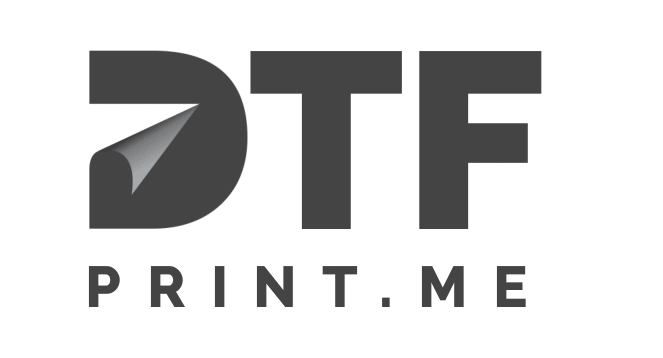
A dtf printing service has zero setup costs per order. There are no screens to burn, no minimum color restrictions, and no per-color fees.
The DTF process:
- Design is printed onto PET film using CMYK+White ink
- Hot-melt TPU adhesive powder is applied over the wet ink
- The film is cured at controlled heat to bond powder to ink
- The finished transfer is pressed onto the garment using a heat press
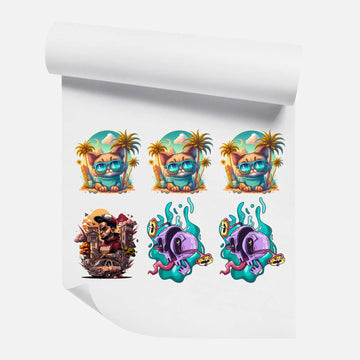
From a cost perspective: you pay for the transfer area used. A 4"×4" chest logo for 12 shirts costs the same per unit whether you order 12 or 120. No setup fee gets added on top.
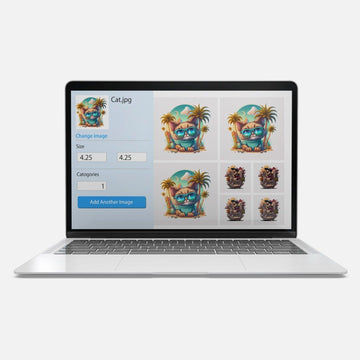
For a small business ordering through a custom DTF printing service, a 4"×4" gang sheet transfer typically runs $1.50–$2.50 per print. Add the blank garment and press labor, and a finished custom shirt comes in well under what screen printing charges for low-quantity runs.
Side-by-Side Cost Comparison: 12 Shirts vs. 200 Shirts
12-Shirt Order — 4-Color Front Print
| Factor | DTF | Screen Printing |
|---|---|---|
| Setup fee | $0 | $80–$120 (4 screens) |
| Cost per transfer | ~$2.00 | ~$4.00–6.00 (setup amortized) |
| Minimum order | 1 piece | 24 pieces (most shops) |
| Turnaround | 24–72 hrs | 7–14 business days |
| Dark garment surcharge | None | +$20–35 (extra screen) |
| Total per shirt (blank excluded) | ~$2.00 | ~$10.50–15.00 |
200-Shirt Order — Same 4-Color Design
| Factor | DTF | Screen Printing |
|---|---|---|
| Setup fee | $0 | $80–$120 (4 screens) |
| Cost per transfer | ~$1.20–1.50 | ~$1.50–2.50 |
| Dark garment surcharge | None | +$0.10–0.20/shirt |
| Total per shirt (blank excluded) | ~$1.30–1.50 | ~$1.90–2.80 |
At 200 pieces, screen printing closes the gap but DTF still competes. At 500+ pieces, screen printing's economies of scale begin to pull ahead in pure per-unit cost.
The crossover point for most orders: 300–400 pieces. Below that, a reliable dtf printing service consistently delivers lower total cost.
Design Complexity: Where DTF Has No Limitations
Screen printing charges per color. A 7-color design costs significantly more to set up than a 2-color design — more screens, more setup time, more wash-out fees if you change ink.
DTF has no color count limit. CMYK+White ink reproduces:
- Full-color photography
- Complex gradients
- Fine detail and small text
- White-on-dark without extra steps
- Color blends and halftones
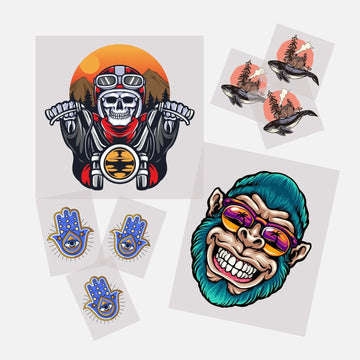
A photorealistic design printed via a custom DTF printing service costs the same per square inch as a single-color block logo. That's a significant structural difference when you're dealing with branded designs, team graphics, or event artwork.
Screen printing does produce vivid, bold spot colors — Pantone-matched and highly saturated — that DTF can approach but not always exactly replicate. For a 1-color or 2-color design at high volume, screen printing's color output is hard to beat.
Fabric Compatibility
Both methods work on cotton. After that, the comparison shifts.
DTF works on:
- 100% cotton
- 100% polyester
- Poly-cotton blends (50/50, 60/40)
- Performance wear and moisture-wicking fabrics
- Denim, canvas, fleece
- Nylon (with low-temp formula)
Screen printing works best on:
- 100% cotton or high-cotton blends
- Flat, smooth fabric surfaces
- Garments that can withstand multiple press passes
Screen printing on 100% polyester requires sublimation-compatible inks and specialist setup. On performance wear, dye migration can bleed through the ink. Most screen print shops decline 100% polyester orders or charge a significant premium.
For a DTF printing service handling mixed fabric orders — cotton tees, polyester hoodies, performance shirts in the same run — DTF handles all of them without changing the production setup.
Turnaround Time: Rush Orders
Screen printing turnaround at most US shops: 7–14 business days standard, 3–5 days for rush (with a premium).
That lead time exists because of the physical setup involved — screen preparation, ink mixing, press registration, curing, and quality checking all happen before pressing begins on the first shirt.
DTF turnaround: most professional services ship within 24–48 hours. The file goes in, the transfer comes out, and pressing takes minutes per shirt.
For event orders, last-minute team gear, or a client who approved artwork on Wednesday and needs 30 shirts by Friday — DTF is the only realistic option.
When Screen Printing Still Makes Sense
Screen printing is not obsolete. It still wins in specific situations:
High-volume repeat runs: 300+ pieces of the same design, same colorway, reordered regularly. Setup costs amortize across thousands of shirts over time.
Specialty ink effects: Puff ink, metallic foils, glow-in-the-dark, discharge printing — these effects require screen printing. DTF cannot replicate them.
Very simple designs at scale: A 1-color logo on 500 shirts? Screen printing is fast, consistent, and cheap per unit.
Premium hand-feel preference: Water-based screen printing inks soak into the fabric fiber and produce an extremely soft, breathable feel after washing. DTF transfers sit on top of the fabric — the feel is excellent but different, slightly more like a smooth film layer.
If your business runs regular large-volume orders of simple designs on cotton, screen printing has a legitimate place in your production mix. Many successful decorators run both methods and choose based on order size.
Real-World Scenarios: Which Method Fits
Scenario 1: 15 shirts for a local restaurant staff Menu logo, 3 colors, front left chest. Need them in 5 days. → DTF wins. No minimums. No setup fees. Ships in 2 days. Total transfer cost: ~$30.
Scenario 2: 500 shirts for a university athletic department Single-color mascot, cotton tees, reordered every semester. → Screen printing wins. Volume justifies setup. Per-unit cost drops under $1.00 at this scale.
Scenario 3: 40 shirts for a corporate event — 8 different department names, same logo base Multi-color logo plus variable name text on each shirt. → DTF wins. Variable data is a nightmare for screen printing (new screen per text variation). DTF handles it as a standard gang sheet with individual name layouts.
Scenario 4: 200 performance hoodies for a youth sports team Full-color design on 100% polyester zip-ups. → DTF wins. Screen printing on full polyester requires specialty inks, dye migration protection, and premium setup. DTF presses cleanly at adjusted temperature (290–305°F) without extra steps.
Wash Durability: The Real-World Numbers
This question comes up every time. DTF owners worry their prints will crack after a few washes. Screen print advocates claim permanent durability.
The reality is more nuanced.
DTF durability: A correctly pressed transfer on quality fabric survives 40–60 wash cycles without significant cracking or peeling. Press temperature, pressure, and a re-press after the initial application significantly extend transfer life.
Screen printing durability: Plastisol inks (the most common) sit on top of fabric and can crack over time — especially with high heat washing. Water-based inks that cure into the fabric last longer but require specialist equipment and curing control.
Both methods are durable under proper care. Neither is permanent under poor washing conditions (hot water, tumble dry on high, industrial washing machines).
Practical care advice for DTF-pressed garments:
- Wash cold or warm (not hot)
- Tumble dry on medium (not high heat)
- Do not iron directly on the transfer
- Wait 24 hours after pressing before first wash
Under those conditions, DTF transfers perform on par with most plastisol screen prints in everyday wear.
The Decision Framework
Use this to pick the right method for any order:
| Order Size | Design Complexity | Fabric Type | Method |
|---|---|---|---|
| Under 50 pieces | Any | Any | DTF |
| 50–150 pieces | Multi-color or photo | Any | DTF |
| 50–150 pieces | 1–2 color spot | Cotton | Either |
| 150–300 pieces | Simple, repeat | Cotton | Screen printing gains edge |
| 300+ pieces | Simple, repeat | Cotton | Screen printing |
| Any size | Variable data/names | Any | DTF |
| Any size | Polyester/blends | Synthetic | DTF |
| Any size | Rush (under 5 days) | Any | DTF |
Wrapping Up
For small batch orders — anything under 100 pieces — the economics, flexibility, and turnaround speed all point the same direction. DTF handles one-offs, mixed fabric runs, variable data, complex color artwork, and rush timelines without the overhead that makes screen printing expensive at low volumes.
Screen printing is still the right call for large, simple, repeat runs on cotton. Both methods have a place. The mistake is applying screen printing's cost structure to orders it was never designed to handle efficiently.
When you're ready to place a small batch order without minimums or setup fees, DTF Print offers a reliable DTF printing service with 24–48 hour turnaround, gang sheet options, and no minimum order quantity.
Frequently Asked Questions
Q: Is DTF printing better than screen printing for small orders? For orders under 50–100 pieces, DTF printing is more cost-effective. Screen printing requires setup fees of $20–35 per color per screen regardless of quantity. DTF has no setup fees, no minimums, and no per-color charges — making total cost per shirt significantly lower on small runs.
Q: What is the minimum order for screen printing? Most US screen printing shops require a minimum of 24 pieces per order. Designs with 5 or more colors often carry minimums of 50–100 pieces. Some shops will do smaller runs but charge premium per-shirt rates to offset setup costs.
Q: How long do DTF transfers last compared to screen prints? A properly pressed DTF transfer on quality fabric lasts 40–60 wash cycles without significant cracking or peeling. Standard plastisol screen prints perform similarly under normal wash conditions. Both methods degrade faster under hot water washing, high heat drying, or industrial laundering.
Q: Can DTF printing match Pantone colors like screen printing? DTF printing uses CMYK+White ink and cannot exactly match Pantone spot colors. Screen printing can mix ink to a specific Pantone value. For brand-critical exact color matching, screen printing has an advantage. For most commercial applications, DTF color output is accurate and vibrant but may show slight variation from Pantone-specified hues.
Q: Does DTF printing work on polyester fabrics? Yes. DTF transfers bond to 100% polyester, poly-cotton blends, and performance fabrics. Press temperature should be reduced to 290–305°F to prevent dye migration and fabric scorching. Screen printing on 100% polyester requires specialty inks and carries dye migration risks at standard press temperatures.
Q: What is the turnaround time for a DTF printing service? Most professional DTF printing services ship transfers within 24–48 hours of file approval. Screen printing typically takes 7–14 business days at standard lead time. For rush custom apparel orders, DTF is the practical choice.
Q: At what order quantity does screen printing become more cost-effective than DTF? The crossover point is typically around 300–400 pieces for a design with 3–4 colors on cotton fabric. Below that threshold, DTF's absence of setup fees keeps total cost lower. Above 500 pieces with a simple, repeat design, screen printing's per-unit economics begin to pull ahead.


