




If you print custom apparel — whether for a side hustle, a growing brand, or a local business — you have likely asked this question at some point: should I use DTF transfers or heat transfer vinyl (HTV)?
Both methods get heat-pressed onto fabric. Both can look great straight off the press. But the similarities pretty much stop there. DTF transfers and HTV work differently, cost differently, and perform differently once your shirts hit the wash.
This guide breaks down the real differences between the two so you can stop second-guessing and start printing the right way for your specific needs.
What Is Heat Transfer Vinyl (HTV)?
Heat transfer vinyl is a thin, flexible material that comes on rolls or sheets. You feed it through a cutting machine — like a Cricut or Silhouette — which traces your design, cutting only the vinyl and not the backing. You then weed out the unwanted pieces, leaving just your design, and press it onto a garment using heat and pressure.
HTV has been a staple in the custom apparel world for a long time. It is affordable to start with, easy to learn, and works well for simple designs — text, logos, basic shapes. You can get very clean, solid results.
Where HTV runs into trouble is complexity. Multi-color designs require you to cut, weed, and layer each color separately. Gradients, photo-realistic artwork, and fine details are difficult or impossible to reproduce cleanly. And because the vinyl sits on top of the fabric as a solid layer, it can feel stiff and plastic-like, especially on softer garments.
What Are DTF Transfers?
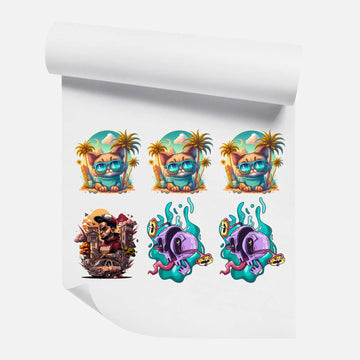
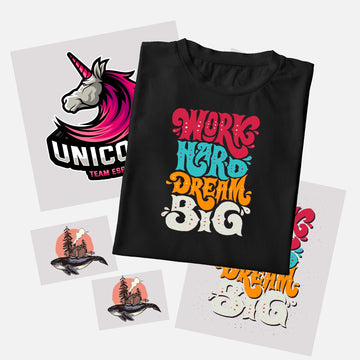
DTF stands for Direct-to-Film. In this process, a design is printed directly onto a special film using CMYK + white ink, then coated with a hot-melt adhesive powder. After curing, you get a ready-to-press transfer that can go on almost any fabric type.
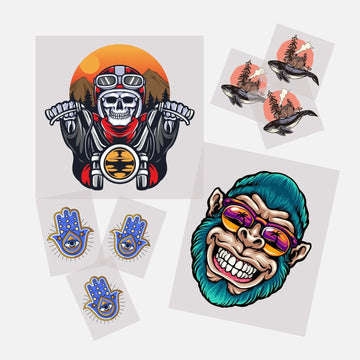
You do not need any special cutting equipment. You upload your artwork file, the transfer gets printed, and you press it. That is it. Full-color artwork, photographic detail, gradients, small text — all of it prints in a single pass.
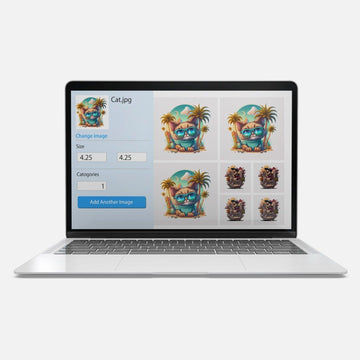
At dtfprint.me, you can order DTF transfers by size and quantity or build a custom DTF gang sheet online to maximize how much you fit on a single sheet and reduce your per-unit cost.
Print Quality: DTF Wins for Complex Art
For simple, solid-color designs — a name on a shirt, a basic logo, block letters — HTV delivers clean, sharp results. It is genuinely good at what it does.
But the moment your design includes more than two or three solid colors, DTF pulls ahead. DTF prints at high resolution with no color layering, no weeding, and no registration issues between layers. Gradients come out smooth. Small text stays readable. Photographic elements hold detail.
If your customers are bringing in complex artwork, sports graphics, full-coverage designs, or anything with fine lines, DTF will produce a better result every time.
Fabric Compatibility
This is one of the biggest practical differences between the two methods.
HTV works well on cotton, polyester, and cotton-poly blends. It is less reliable on nylon, leather, or items with textures. Some fabrics simply do not hold vinyl well, and you end up with peeling within a few washes.
DTF transfers adhere to a much wider range of materials. Cotton, polyester, nylon, denim, leather, canvas, hoodies, hats, bags — DTF handles all of it. If you are decorating beyond basic t-shirts, DTF gives you far more flexibility without switching methods or materials.
You can see the full range of what our transfers work on by visiting our FAQ about ordering or checking out our video tutorials for pressing tips by garment type.
Durability and Wash Performance
Both DTF and HTV can last a long time when applied correctly, but they fail in different ways.
HTV is prone to cracking and peeling at the edges over time, especially with repeated washing. Thicker vinyl layers and design edges are the first places you will see wear. Cold water washing and inside-out garments help, but eventually the vinyl degrades.
DTF transfers, when pressed at the right temperature and pressure, bond strongly to the fabric fibers. The adhesive layer creates a flexible connection that moves with the fabric rather than sitting rigidly on top. When cared for properly — washed cold, turned inside out, air dried or low-heat tumble dried — DTF prints hold up through 50+ wash cycles without noticeable fading or peeling.
For wash care specifics, see our blog post on how to wash and care for DTF prints.
Cost Comparison: Setup vs. Per-Print
HTV appears cheaper upfront. Vinyl rolls and a cutting machine are accessible, and the materials themselves are inexpensive for basic designs. But costs add up quickly when you factor in weeding time, wasted material from complex cuts, and the extra labor per shirt.
DTF transfers have a higher per-transfer cost when you order single pieces, but that gap closes fast when you order smart. Using a gang sheet — where multiple designs are arranged on one large sheet — you can dramatically reduce your per-print cost. Our ready-to-print DTF gang sheets start at under $6, and the online gang sheet builder makes it simple to pack a sheet efficiently.
For anyone printing more than a dozen shirts a week, the math almost always favors DTF once you account for time.
Ease of Use and Workflow
HTV requires a cutter, design software compatible with your cutter, weeding tools, and some practice getting clean weeds on detailed designs. Each color in a multi-color design is a separate step. Misalignment between layers is a real problem with complex artwork.
DTF workflow is simpler on your end. Prepare your PNG file with a transparent background, upload it, choose your size, and your transfer arrives ready to press. No cutting, no weeding, no layering. You just press and peel.
Check our artwork and sizing FAQ for file prep guidelines, and our instructions page for press settings.
When HTV Still Makes Sense
HTV is not obsolete. There are real situations where it remains the better choice:
● You are doing simple 1-2 color text or logo designs in low volume
● You already own a cutting machine and want to use it
● You need a matte or glittery textured finish that HTV specialty materials provide
● You are making one-off personalized items and want immediate, in-house control
For those use cases, HTV is a reasonable tool. But for most production scenarios, especially if you are running a business rather than a hobby, its limitations become friction points quickly.
When DTF Transfers Are the Clear Choice
DTF makes the most sense when:
● Your designs have more than two colors, gradients, or photographic detail
● You are decorating a variety of garment types, not just cotton tees
● You want fast turnaround without owning or maintaining printing equipment
● You are scaling up and need consistent results across larger runs
● You want to offer your customers professional-grade print quality
If you are serious about custom apparel as a business, DTF transfers let you take on any order — simple or complex — without limitations. You can even try before you commit with our DTF transfer sample pack.
Frequently Asked Questions
Is DTF better than HTV for dark shirts?
Yes. DTF prints include a white ink underbase that makes colors pop on dark fabrics without any extra steps. With HTV, you need white vinyl underneath colored layers, which adds time and stiffness. DTF handles dark garments cleanly in one press.
Can I switch from HTV to DTF without buying new equipment?
Yes. If you already have a heat press, you can use DTF transfers without any additional equipment. You do not need a printer, cutter, or RIP software. Just order your transfers and press them.
Which lasts longer — DTF or HTV?
Both last well when applied correctly, but DTF tends to outlast standard HTV in real-world washing conditions. The flexible adhesive bond of DTF is less prone to edge cracking and peeling compared to vinyl that sits on top of the fabric.
Is HTV cheaper than DTF?
HTV has a lower material cost for simple designs, but when you factor in labor for weeding, setup time for multi-color designs, and the limits on design complexity, DTF often delivers better value per finished garment — especially as order volume grows.
Bottom Line
HTV is a solid tool for simple designs and hobbyist work. But if you are running a custom apparel business, taking on a variety of designs, or decorating more than t-shirts, DTF transfers offer better print quality, wider fabric compatibility, and a faster workflow with no cutting or weeding required.
Ready to see the difference for yourself? Start with a free DTF transfer sample pack or contact us and our team will help you figure out the right setup for your production needs.


