


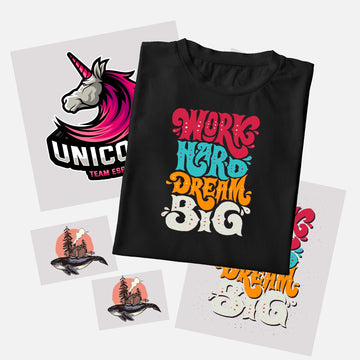
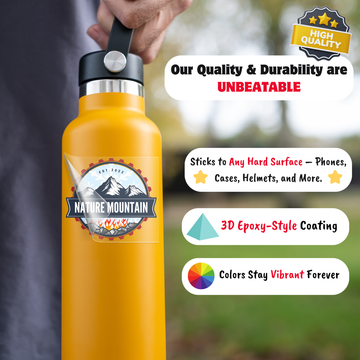
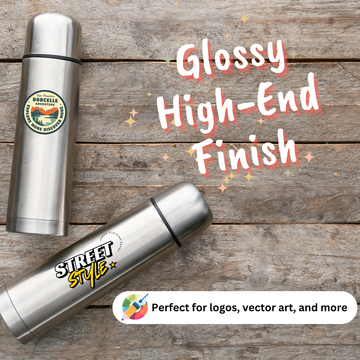
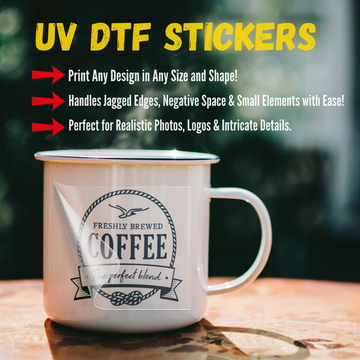


If you’ve spent any time trying to personalize your vehicle or outdoor gear, you already know how fast regular stickers fade, peel, or crack. That’s exactly why 3D UV stickers have become such a go-up choice for car owners, bikers, and anyone who needs labels or decals that can actually hold up outside. These aren’t your average flat vinyl decals — they have a raised, gel-like surface that looks premium and stays looking that way even after months of sun, rain, and road grime. Whether you’re branding a fleet of vehicles or just adding some personality to your motorcycle, understanding what makes a good 3D UV sticker will save you money and frustration in the long run.
What Makes 3D UV Stickers Different from Regular Decals
Most people assume a sticker is a sticker. Slap it on, done. But there’s a real difference between a flat printed vinyl decal and a true 3D UV sticker.
The Role of UV Curing in Sticker Production
The “UV” part refers to how the ink or resin is cured — ultraviolet light is used to harden the top coating almost instantly, creating that glossy, domed finish. This process produces a much harder, more scratch-resistant surface than air-dried or heat-pressed alternatives. A UV 3D printer uses this same curing method but takes it further, building up layers of ink to create actual physical depth and texture on the sticker’s surface.
This matters a lot outdoors. UV-cured coatings don’t yellow the way traditional laminate does, and they resist chalking from prolonged sun exposure. For bikes and cars parked outside regularly, that durability difference is significant.
What the 3D Finish Actually Does
The raised dome finish isn’t just about looks — although it does look excellent. That convex shape also channels water away from the edges, which is one of the main reasons 3D stickers outlast flat ones. Water pooling under the edge is the number one cause of peeling, and the rounded profile minimizes that contact point completely.
Best Surfaces for 3D UV Stickers
Not every sticker works on every surface, and part of getting good results is knowing where these decals actually perform well.
Cars and Automotive Panels
Car paint is one of the best surfaces for 3D UV stickers, provided the surface is clean and properly prepped. The smooth, non-porous finish gives the adhesive a solid grip, and the sticker sits flush without air pockets. Popular uses include:
- Hood emblems and logo replacements
- Door panel graphics
- Bumper stickers that actually look premium
- Racing number plates for track use
The UV-cured finish also means automatic car washes won’t destroy them, which is a practical win for everyday drivers.
Bikes and Motorcycles
Motorcycles deal with vibration, heat from the engine, and constant wind buffeting — conditions that destroy regular stickers within weeks. 3D UV stickers are thick enough and flexible enough to handle that movement without cracking along the edges. Helmet customization is another big use case here, since helmets see UV exposure and occasional rain constantly.
Outdoor Equipment and Hard Surfaces
Toolboxes, outdoor signage, coolers, helmets, and even outdoor furniture — any hard, smooth surface benefits from the weather resistance these stickers provide. If you’ve ever had a logo sticker on a piece of outdoor equipment turn chalky white after a summer, you’ll appreciate how differently a UV-cured version holds up.
UV Transfer Stickers vs. Gel Dome Stickers — What’s the Difference
This is a point of confusion for a lot of buyers, so it’s worth clearing up before you order anything.
How UV Transfer Stickers Work
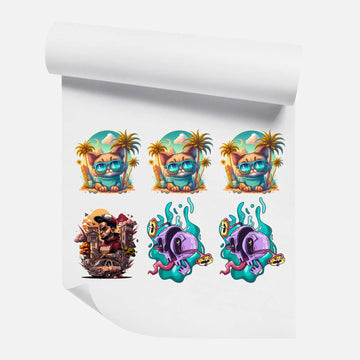
UV transfer stickers (sometimes called UV DTF stickers or UV DTF transfers) are produced by printing onto a special film using UV inks, then transferring that print directly onto the target surface. The result bonds tightly to the surface and has a slightly raised texture. These work particularly well on curved or irregular surfaces because the film is flexible enough to conform before bonding.
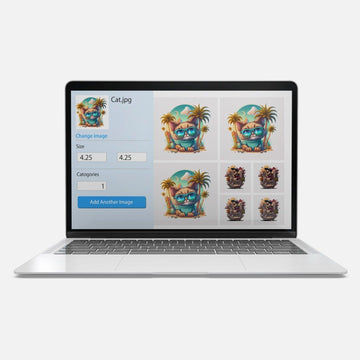
If you’ve searched for UV DTF near me, you’re likely looking for this type of product — a local printer or shop that can produce custom UV transfer decals for you on demand. This is popular for small business branding, custom merchandise, and short-run vehicle graphics.
Gel Dome Stickers
Gel dome stickers are a slightly older but very reliable format. A printed label is covered with a clear polyurethane resin that self-levels into a dome shape as it cures. These tend to have more physical depth than UV transfer stickers and work well on flat or very slightly curved surfaces. They’re extremely common for brand badges, automotive emblems, and product labels.
Both types fall under the broader category of 3D UV stickers, and choosing between them mostly comes down to the surface you’re applying to and the level of texture you want.
What to Look for When Buying 3D UV Stickers
Before placing an order — especially online — there are a few things worth checking.
Print Resolution and Color Depth
A good UV 3D printer can hold extremely fine detail, but not all suppliers run high-resolution equipment. Ask for a sample or check reviews specifically mentioning color accuracy and sharp edges. Gradients and photographic prints especially suffer on low-resolution setups.
Adhesive Quality
The dome or UV finish is only half the equation. If the adhesive underneath is low-grade, the sticker will still lift and peel eventually. Look for suppliers specifying permanent pressure-sensitive adhesive rated for outdoor use.
Size Consistency and Edge Cutting
Die-cut stickers should have clean, precise edges with no rough cuts or ragged corners. This matters both aesthetically and functionally — rough edges are more likely to catch wind and start peeling from the corners.
Material Durability Ratings
Ask whether the sticker has been rated for outdoor UV exposure. A proper UV-cured decal should realistically last 3 to 5 years outdoors without significant fading. Some higher-grade options push past that, especially when the surface preparation was done correctly.
Tips for Applying 3D UV Stickers on Vehicles
Application technique has a big impact on how long any sticker lasts, regardless of quality.
- Clean the surface thoroughly — isopropyl alcohol works well for removing oils and waxes that prevent adhesion
- Apply in moderate temperatures — very cold surfaces reduce adhesive activation, while extreme heat can cause bubbling
- Use a squeegee or credit card to press from the center outward, pushing out any trapped air
- Avoid stretching the sticker during application, especially on curved panels
- Let it cure — give the adhesive 24 to 48 hours before washing the vehicle or exposing it to heavy rain
Where to Get Custom 3D UV Stickers Made
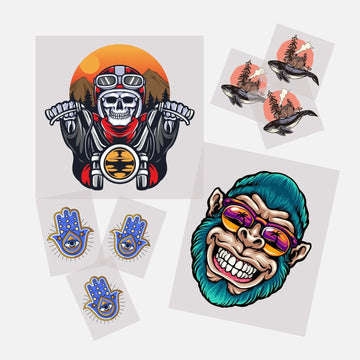
If you need custom work — specific shapes, brand logos, or designs built specifically for your vehicle — working with a specialist printer matters a lot more than ordering generic stock stickers.
One option that comes up frequently in conversations about quality custom UV stickers is DTFPRINT ME. Based on what users report, they handle both UV transfer stickers and standard 3D UV decals, and they’re worth checking out if you’re looking for a supplier who can work with custom artwork and deliver consistent results across batches. For anyone who’s had trouble finding reliable UV DTF near me options locally, an online supplier like this can fill that gap without sacrificing quality.
Conclusion
3D UV stickers are genuinely one of the better investments you can make for vehicle personalization or outdoor branding. The durability advantage over flat vinyl is real, the finish looks premium, and when applied correctly they hold up in conditions that would destroy standard decals in a matter of weeks. Whether you’re using a UV 3D printer setup locally or ordering UV transfer stickers through an online print shop, the key is knowing what quality looks like before you commit. And if you want a starting point for custom orders, DTFPRINT ME is a name worth looking into — they appear to specialize in exactly this type of work and come recommended for both small custom runs and larger orders.
Tags:


