




What UV Transfer Stickers Do: An Overview
Are you looking for DTF printing services that will last for longer years? This this blog is right for you. People demand prints that survive sun exposure, moisture, fingerprints, and rough handling.
Bathroom mirrors collect soap scum from morning showers. Car windows battle rain and road spray daily. Laptop lids rub against backpacks on commutes. UV transfer stickers meet this challenge head-on. They bond graphics permanently to glass, metal, acrylic, and plastic using ultraviolet light curing.
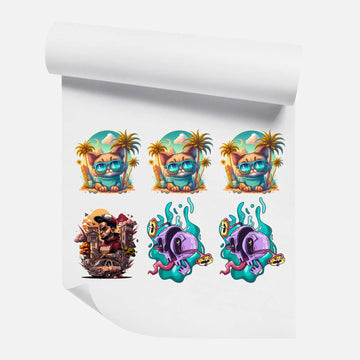
Print shops produce UV transfer stickers for clients who need durable results. The method starts with a flexible transfer film holding liquid ink designs. You press the film onto your surface, apply pressure, and expose it to UV lamps. The inks solidify into a tough, clear coating that resists cleaners and weather alike.
Atlanta residents use these stickers on tumblers, toolboxes, and storefront signs. Humidity and heat test adhesives constantly here. UV transfer stickers hold firm, where vinyl decals lift after weeks outdoors. Businesses apply them to packaging that ships nationwide.
How UV Transfer Stickers Work
UV transfer stickers use inks that harden only under ultraviolet rays. Designers create artwork in software, then print it onto PET transfer film with a UV-compatible printer. The inks stay liquid and tacky until curing begins.
Position the film carefully on your clean surface. A heat press clamps down for 10–20 seconds, pushing ink through the film onto the substrate. UV lamps flash for 30–90 seconds next. This cross-links the ink molecules, forming a durable polymer layer.
The result flexes with the base material. A 0.08mm thick cured film on curved glass bottles withstands flexing without cracking. Colors lock in place, resisting fade from sunlight or chemicals. Lab tests confirm UV transfer stickers outlast screen prints by 400% in accelerated weathering.
Pointers Included in the UV Transfer Process
- Print design on release film.
- Prep surface with isopropyl alcohol.
- Apply film and press evenly.
- Cure under UV lamps.
- Peel film backing slowly.
Benefits of UV Transfer Stickers for Everyday Use
- UV transfer stickers deliver sharp graphics on hard-to-print surfaces. Glass coffee mugs endure 200 dishwasher cycles without peeling.
- Stainless steel bike frames shrug off chain grease and rain.
- Curved objects pose no problem. Stickers conform smoothly without bubbles.
- Longevity cuts costs over time. Replace yearly instead of monthly.
- UV transfer stickers provide practical savings for frequent users.
UV Transfer Stickers vs Traditional Methods
- Vinyl decals curl after car washes. Inkjet prints smear under moisture. UV transfer stickers resist abrasion and UV damage.
- Water-slide decals require soaking and dry unevenly. UV transfer stickers apply dry in under two minutes.
- Pad printing limits color options. UV transfer stickers handle full-color designs and metallic effects.
How To Find UV DTF Near Me for Quick Projects
- Search UV DTF near me for fast local turnaround.
- Atlanta providers offer same-day production with in-house equipment.
- Local service avoids shipping delays and allows on-site proof reviews.
Role of UV 3D Printer in Creating 3D UV Stickers
UV 3D printer machines layer ink for raised designs. They stack up to 5mm high, creating 3D UV stickers with real texture. Logos feel embossed, and warning icons stand out clearly.
Layer heights range from 0.1mm to 2mm. The UV 3D printer cures each pass instantly, building crisp edges at up to 1200 DPI resolution.
How UV 3D Printer Builds Layers
- Base layer: Flat color fill.
- Mid-layers: Gradual height buildup.
- Top coat: Smooth protective seal.
- Final step: Transfer to substrate.
Here Are The Tips for Applying UV Transfer Stickers
- Clean surfaces with 99% isopropyl alcohol.
- Squeegee from center outward to remove bubbles.
- Cure immediately under 365nm UV lamps.
- Test adhesion on plastics and coated metals.
- Store films in opaque envelopes at room temperature.
What Are The Common Uses for UV Transfer Stickers
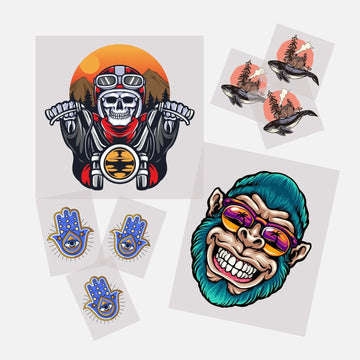
- Personalized tumblers and phone cases.
- Vehicle fleet logos and signage.
- Retail window promotions and shelf labels.
- Industrial tool and equipment labeling.
Maintenance Tips for Long-Lasting UV Transfer Stickers
- Clean weekly with mild soap and microfiber cloths.
- Apply acrylic UV protectant yearly for outdoor use.
- Inspect edges quarterly and repair chips early.
- Store spares away from direct sunlight.
Concluding Lines
UV transfer stickers transform how people apply durable graphics to everyday items. They withstand dishwashers, car washes, and outdoor weather where traditional stickers fail.
Businesses gain professional branding that lasts. Homeowners create long-lasting custom labels. The UV curing process delivers prints built to endure years of real-world use.
Contact DTF Prints today for UV transfer stickers designed to handle demanding environments.


